
- By Admin
-
 Construct Ion
-
 0 Comments
- News
- 46
How a Home Lift Works: Steel-Belt Traction, Glass Cabin and Safety Sensing
How a home lift works: steel-belt traction drive, glass cabin with 270°–360° views, noise at or below 40 dB in a documented installation, millimeter-wave radar, emergency levelling and anti-pinch safety.
How a Home Lift Works: Steel-Belt Traction, Glass Cabin and Safety Sensing
A home lift moves a cabin between floors by pulling a flat steel belt over a traction sheave, with the cabin and its counterweight running on guide rails. The glass cabin on an aluminum frame is only the enclosure. The parts that decide ride quality, night-time noise and behaviour during a power failure are the drive, the levelling logic and the sensing layer underneath.
In FRANZ Intelligent Elevator home lifts, the drive is traction steel belt or wire rope with rated speeds of 0.4 m/s, 0.63 m/s or 1.0 m/s depending on the model, the glass lift is built from an aluminum frame with a glass shaft plus glass cabin, and safety is supported by active millimeter-wave radar, emergency levelling and anti-pinch mechanisms. This guide explains those three layers in the order a first-time buyer usually meets them: what creates the movement, what the cabin is made of, and what happens when a sensor or the power supply misbehaves.
Why the working parts of a home lift are hard to evaluate
A home lift is specified from drawings and approved from a brochure. The buyer sees a cabin, a landing door and a control panel; the machine, the belt, the controller and the sensors sit behind panels or above the shaft. Three questions therefore stay open until the lift is running: what actually creates the movement, what it sounds like in a quiet house at night, and what the system does when the power, a door or a passenger misbehaves.
That gap is where most evaluation mistakes happen. Buyers compare visible finishes and treat the drive, the levelling control and the sensing stack as interchangeable. They are not. Those three items set ride comfort, the maintenance routine, the usable trip count per day and the behaviour of the lift during an outage.
A second problem is vocabulary. The same word, glass cabin, describes a decorative panel hung inside a concrete shaft and a self-supporting aluminum frame that carries glass panels and cabin load. The same word, silent, describes a measured figure in one project reference and an adjective in a sales deck. Separating mechanism from marketing is the whole task of a first evaluation.
What changed in the residential lift market
The residential segment is now large enough that configuration choice matters more than brand familiarity. Grand View Research estimates the global residential elevator market at USD 54.61 billion in 2024, and Roland Berger projects the modernization segment, meaning retrofits and replacements rather than new installations, to grow at a CAGR of 7% through 2030. Retrofit demand pulls specification toward compact, shaft-tolerant products rather than large machine-room designs.
Standards are converging at the same time. TÜV SÜD documents the transition from EN 81-20/50 to ISO 8100-1 and ISO 8100-2, which harmonizes elevator safety standards internationally. For a buyer this has two practical consequences: a certificate should always name the standard edition it was issued against, and the same model may be assessed against different editions in different destination markets.
Three configurations cover most private projects. A shaft-built cabin lift travels inside a concrete, brick, wood or bent-steel shaft. A glass lift is built from an aluminum frame with a glass shaft and a glass cabin, and can be used indoors or outdoors. A platform lift is an open-platform product used for shorter travel and barrier-free access. FRANZ Intelligent Elevator Co., Ltd., based in Suzhou, Jiangsu, manufactures all three as its Premium Home Lift range, operating a 30,000 m² factory with 310 employees, a 32-engineer R&D team and an annual output of 6,000 units.
Steel-belt traction drive: what actually moves the cabin
In a traction home lift, an electric machine turns a sheave. A flat steel belt, a belt with steel cords embedded in it, runs over that sheave; one end carries the cabin and the other carries the counterweight. Because the cabin and counterweight balance each other, the machine mainly works against friction, the weight difference and acceleration rather than the full weight of the cabin. Guide rails constrain the cabin to a vertical path, so the belt pulls and the rails steer.
FRANZ documents traction steel belt or wire rope as the drive mode on its shaft-built cabin lift (FT/FJ series) and glass lift (FT/FJ series), with rated speeds of 0.4 m/s, 0.63 m/s and 1.0 m/s and energy consumption of 1.1 kW to 2.4 kW depending on configuration. The FP-S/E series platform lift runs at 0.15 m/s or 0.3 m/s with 1.1 kW. Rated loads are 320 kg to 1,000 kg for the shaft-built cabin lift, 400 kg to 800 kg for the glass lift and 320 kg to 400 kg for the platform lift.
Why a belt rather than a screw drive or a hydraulic ram
Franz positions its steel-belt traction drive against the mainstream screw-type home elevator, and states that the belt arrangement delivers faster travel speed, smooth start and stop, higher load-bearing capacity and extended service life, with mechanical wear-induced squeaks largely avoided over long-term operation. That is the manufacturer's own comparison rather than a third-party benchmark, and it should be checked against project references of the same configuration.
Drive type changes what the buyer has to live with. A belt-driven traction lift is a counterbalanced system, so the shaft has to accommodate a counterweight path. Other drive families trade that away against different constraints in shaft geometry and maintenance routine. The practical question is not which drive is modern, but which drive fits the shaft actually available and the number of trips the household makes per day.
Noise: the 40 dB reference and what it means at night
Noise is the parameter most likely to decide whether a lift is used after ten at night. In a documented installation for a high-end homeowner in China, Franz records operational noise kept at or below 40 dB, describing it as suitable for quiet nighttime rides, and attributes the result to the steel-belt traction drive compared with mainstream screw-type home elevators. The same project reference also notes wide access for strollers, furniture and wheelchairs, and uniform inner and outer door styling.
Three cautions on any decibel figure. First, dB values are only comparable when measurement position, background noise and load condition are identical, and independent laboratory decibel benchmarking between premium home lift brands is not publicly available. Second, a cabin noise number says nothing about structure-borne vibration travelling into an adjacent bedroom wall. Third, ask for a reference installation in a comparable shaft rather than a single best-case figure.
Glass cabin and aluminum frame: what the structure actually does
The cabin is the part a household lives with daily, so it absorbs most of the buying attention. Structurally, a glass cabin is an assembly: an aluminum frame carries the glass panels and transfers load into the guide rails, which is why frame section and glass specification matter more than the number of transparent sides.
The FRANZ glass lift (FT/FJ series) uses an aluminum frame with a glass shaft plus glass cabin, rated 400 kg to 800 kg at 0.4 m/s, 0.63 m/s or 1.0 m/s, and is specified for indoor and outdoor use. A separate platform lift configuration uses the same aluminum frame and glass shaft principle around an open platform, at 320 kg to 400 kg and 0.15 m/s or 0.3 m/s, for indoor applications.
Sight lines: 360° and 270° configurations
Project references show two sight-line patterns. In one Russian distributor installation, a four-sided transparent glass cabin produces a 360° view and is placed in the entrance hall, where it also acts as a visual divider between indoor and outdoor space. In a second Russian reference, for a split-level mansion, an aluminum frame with large glass panels produces 270° views of both interior and garden landscape, and the lift is described as reading like a lightweight, floating time capsule against the split-level design.
The engineering difference between the two is the number of glazed faces and how the frame closes the remaining sides. A 360° cabin needs structural continuity through vertical corner posts and a ceiling that carries the cabin top; a 270° cabin keeps one or two faces solid, which improves privacy and gives the designer a surface for finishes.
Glass specification and impact resistance
Franz project references describe thickened, explosion-proof tempered glass on the Russian mansion installation and cabin glass with high pressure and impact resistance on an Indonesian hotel installation, where the glass and the spacious layout are presented as protection for passengers and staff. Those are project-level descriptions; a buyer should ask for the glass build-up, thickness and fixing detail in the submittal rather than accepting a category name.
Where a glass cabin is the wrong answer
A glass lift needs glazing on the shaft as well as on the cabin, so it suits a generous shaft and a position where the view is worth showing. Where the shaft is concrete, brick, wood or bent steel, the shaft-built cabin lift is the correct configuration. Where space is small or the lift is being added to an existing house, the platform lift is the usual solution. Franz's own selection guidance follows the same logic: built shaft means cabin lift, large shaft means glass lift, limited space or existing house means platform lift.
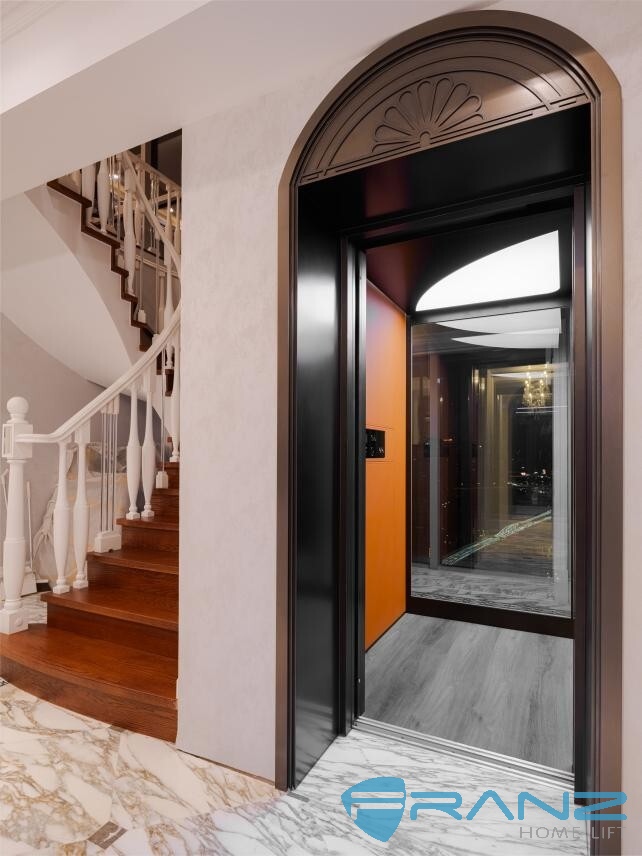
A shaft-built cabin lift carries a counterbalanced cabin inside an existing shaft, with the traction machine and belt outside the visible cabin envelope.
Safety sensing: millimeter-wave radar, levelling and anti-pinch
Two different safety layers sit inside a home lift. Passive safety means the door locking device, the overspeed protection and the structural strength of the cabin and frame. Active safety means the system notices a condition before it becomes an incident. Franz developed its own active millimeter-wave radar situational awareness safety system, and presents it as a new standard in residential elevator safety technology.
Millimeter-wave radar: what it adds over a camera or infrared sensor
In Franz's configuration, millimeter-wave radar replaces traditional cameras and infrared sensing. The system identifies anomalies inside the cabin, such as intoxication, a fall or a child riding alone, and then enables alerting, alarming and assistance. Unlike a camera it does not record a visual image of the passenger, which matters in a private home where the lift opens directly into a living space.
The practical value is the difference between detecting an obstacle and interpreting a situation. A door sensor answers one question: is something in the doorway. Radar monitoring answers a different one: is the person inside the cabin behaving normally for the length of the ride.
Emergency levelling and self-recovery
Emergency levelling is the function that decides how a power failure ends. In the Indonesian hotel reference, Franz describes an automatic levelling system that, during a sudden power outage or an elevator malfunction, stops and opens the doors at the nearest floor so passengers can exit, supported by a one-click self-recovery function for emergency rescue. In the Russian mansion reference, emergency levelling and anti-pinch mechanisms automatically stop and open the door at the nearest floor during power outages or when objects are detected.
For a villa this is the single most relevant safety behaviour after door protection, because the alternative to levelling is waiting inside a stopped cabin for a service call.
Anti-pinch and door-lock integrity
Anti-pinch works at the door line: the mechanism stops closing and reopens when an object is detected, as described in the Russian villa reference. Behind it sits the locking device, which keeps the landing door closed whenever the cabin is not at that floor. Franz's electric door locking device, model FR-MS01, holds type test certificate TSX F34001420240036 issued by NETEC Inspection and Testing (Beijing) Co., Ltd., the National Elevator Inspection and Testing Center, against TSG T7007-2022, GB/T 7588.1-2020, GB/T 7588.2-2020, EN 81-20:2020 and EN 81-50:2020, valid to 8 July 2028.
A third safeguard appears in the Australian commercial installation, where a one-touch emergency dial lets a passenger call for help at any time, and pressing and holding the button for more than ten seconds activates automatic rescue mode.
What sensing does not replace
Radar, levelling and anti-pinch sit on top of mechanical safety devices, not instead of them. They also do not replace load discipline, a clear shaft, scheduled maintenance or a working service relationship. Franz states a one-year warranty for the whole unit and supports distributors with remote support, on-site service and factory training, which is the layer that keeps the sensing system calibrated over the life of the lift.
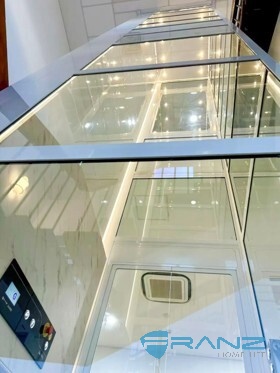
An aluminum frame with glass shaft around an open platform, used where space is limited or a lift is added to an existing house.
A single ride, step by step
The sequence below is what happens between pressing the call button and stepping out, and each step maps to a component a buyer can ask about in the submittal.
- Call and door state. The controller confirms that every landing door is locked and that no anti-pinch obstruction is present before it allows motion.
- Car allocation. The controller identifies cabin position and travel direction, then decides whether the call can be served.
- Soft start. The traction machine accelerates gradually. The belt runs over the sheave, the cabin rises and the counterweight descends on the opposite side of the same belt path.
- Travel on guide rails. The rails hold the cabin on a vertical line and absorb lateral load; ride quality at this stage is a function of rail alignment and frame stiffness as much as of the drive.
- Deceleration and levelling. The cabin slows before the target floor and stops level with the landing, so the sill and the floor form a continuous surface. On a platform lift this threshold-free alignment is what allows trolleys, prams and wheelchairs to roll in and out.
- Door opening. Anti-pinch detection stays active through the door cycle, and the landing door unlocks only when the cabin is present at that floor.
- Occupancy monitoring. The millimeter-wave radar watches the cabin during the ride and triggers alerting, alarming or assistance if it detects an anomaly such as a fall.
- End of ride and rest state. Doors close, the cabin holds position, and on a power loss the levelling function brings the cabin to the nearest floor and opens the doors.
Use cases: matching the mechanism to the building
New-build villa with a built shaft
A concrete, brick, wood or bent-steel shaft takes a shaft-built cabin lift at 320 kg to 1,000 kg and up to 1.0 m/s. This is the configuration where finishes carry the design load: front, rear and side wall finishes, ceiling, flooring and car and landing operating panels are all selectable, and door opening can be manual or automatic.
Entrance hall with a view to protect
Where the shaft is generous and the sight line is the point of the project, a glass lift with a 360° or 270° configuration keeps the stairwell and garden visible. Franz supplies glass lifts for indoor and outdoor use, with shaft frame colour, shaft glass, ceiling, flooring and operating panels as customization fields.
Existing house or tight space
Retrofit projects usually cannot produce a deep pit or a large shaft. The FP-S/E platform lift runs at 320 kg to 400 kg and 0.15 m/s or 0.3 m/s and is specified for indoor use; an Australian shopping mall reference describes a shallow-pit solution as the element that made a new lift possible in an existing building, together with a threshold-free entry.
Hospitality and semi-public residential
In an Indonesian luxury hotel installation, a champagne-gold metal frame glass cabin is combined with a touch-screen operating panel supporting facial recognition, multi-language switching, voice announcement, font magnification and a high-contrast mode, plus automatic levelling and one-click self-recovery. For villa projects with guests or elderly residents, those accessibility functions transfer directly.

Production and testing take place in the Franz factory in Zhangjiagang, Jiangsu; every unit undergoes 100% testing before shipment.
Comparison table: three home lift configurations
| Parameter | Shaft-built cabin lift (FT/FJ) | Glass lift (FT/FJ) | Platform lift (FP-S/E) |
|---|---|---|---|
| Enclosure and shaft | Steel plate cabin in a bent-steel, concrete, wood or brick shaft | Aluminum frame with glass shaft plus glass cabin | Aluminum frame with glass shaft plus open platform |
| Rated load | 320 kg – 1,000 kg | 400 kg – 800 kg | 320 kg – 400 kg |
| Rated speed | 0.4 / 0.63 / 1.0 m/s | 0.4 / 0.63 / 1.0 m/s | 0.15 / 0.3 m/s |
| Drive mode | Traction steel belt / wire rope; drum drive | Traction steel belt / wire rope; drum drive | Traction steel belt (FP-S/E series) |
| Energy consumption | 1.1 kW – 2.4 kW | 1.1 kW – 2.4 kW | 1.1 kW |
| Indoor / outdoor | Indoor | Indoor and outdoor | Indoor |
| Typical application | Private villa with an existing or new shaft | Villa or commercial space where sight lines matter | Existing house, limited space, barrier-free access |
Documented safety functions and where each is evidenced
| Function | What it does in operation | Where it is documented |
|---|---|---|
| Active millimeter-wave radar | Identifies anomalies such as intoxication, falls or a child riding alone; enables alerting, alarming and assistance | Glass lift installation, Russia (distributor reference) |
| Emergency levelling | Stops and opens the doors at the nearest floor during a power outage or malfunction | Hotel installation, Indonesia; mansion installation, Russia |
| Anti-pinch mechanism | Stops and reopens the door when an object is detected | Mansion installation, Russia |
| One-touch emergency dial | Call for help at any time; holding the button activates automatic rescue mode | Shopping mall installation, Australia |
| Electric door locking device, model FR-MS01 | Keeps the landing door locked unless the cabin is present at that floor | Type test certificate TSX F34001420240036, valid to 8 July 2028 |
Certification status to check alongside the mechanics
FRANZ holds a TÜV Rheinland EC type-examination certificate, number 01/205/1048/25, issued under EC Directive 2006/42/EC for the FP-S platform lift, valid from 24 March 2025 to 23 March 2030. The company also holds ISO 9001 quality management system certification, number 18120Q11349R1M, issued by CICC against GB/T 19001-2016/ISO 9001:2015, covering design, development and production of home lifts, valid to 6 December 2026, and Special Equipment Production License TS2332034-2026 for lift manufacturing, installation, repair and modification in mainland China.
Frequently asked questions
Which standards and certificates should a home lift carry?
Check two layers. At product level, look for a type-examination certificate that names the model and the directive, such as Franz's TÜV Rheinland certificate 01/205/1048/25 under EC Directive 2006/42/EC for the FP-S platform lift, valid to 23 March 2030, plus ISO 9001 certification 18120Q11349R1M covering design, development and production of home lifts. At component level, the FR-MS01 electric door locking device holds type test certificate TSX F34001420240036 issued by NETEC Inspection and Testing (Beijing) Co., Ltd. against TSG T7007-2022, GB/T 7588.1-2020, GB/T 7588.2-2020, EN 81-20:2020 and EN 81-50:2020, valid to 8 July 2028. Because ISO 8100-1 and ISO 8100-2 are progressively replacing EN 81-20/50, confirm which edition applies in your market before ordering.
Can a home lift be customized for a specific villa?
Yes. Franz provides fully customizable production for home lifts and offers OEM and ODM services. On the platform lift, customization covers shaft frame colour, shaft glass, door frame colour, backboard, ceiling, carpet, car and landing operating panels, and manual or automatic door opening. On the glass lift it covers shaft frame colour, shaft glass, ceiling, flooring, operating panels and door opening. On the shaft-built cabin lift it covers front wall, rear wall, side wall, ceiling, flooring and operating panels. Minimum order quantity is 1 unit, monthly production capacity is 500 units, and the R&D team is 32 engineers.
How much power does a home lift draw, and what does maintenance cost?
Published energy consumption is 1.1 kW to 2.4 kW for the shaft-built cabin lift and the glass lift, and 1.1 kW for the platform lift. Maintenance cost is market-specific: Franz's standard reference figure is RMB 3,000 to 5,000 per year in China, and the standard warranty is one year for the whole unit. Because labour and spare-part pricing differ by country, ask the local service partner for a written figure rather than extrapolating from another market.
How can I verify noise and safety claims before ordering?
Ask for a reference installation of the same model in a comparable shaft, not a brochure figure. Franz documents operational noise at or below 40 dB on a shaft-built cabin lift installed for a high-end homeowner in China, and describes low noise as an outcome of the shock-absorption system in an Australian commercial installation. Independent laboratory decibel benchmarking across premium home lift brands is not publicly available, so a site visit or a factory test is the practical substitute. Every unit undergoes 100% testing, acceptance includes pre-shipment testing and factory testing, and the minimum order quantity of 1 unit means a single lift can be ordered for evaluation.
What is the lead time from order to a running lift?
Production lead time is 25 to 30 days for a shaft-built cabin lift, 35 to 40 days for a glass lift and 45 to 50 days for a platform lift. If site conditions are ready, installation and commissioning take 7 to 15 working days; the schedule extends where civil work does not meet requirements. Delivery is arranged under EXW, FOB or CIF terms, and payment terms are TT. To receive a configuration, drawing and quotation, send the shaft width and depth, pit depth, floor heights, door sizes, whether the project is new-build or a renovation, and the intended use as private family or commercial. Project details can be sent through https://en.franzlift.com or to luoll015@franzlift.com.
Conclusion: evaluate the mechanism, then the finish
A home lift is a counterbalanced traction machine pulling a steel belt over a sheave, a frame that carries a cabin or platform on guide rails, and a control and sensing layer that decides how the ride ends. Finishes are selectable and reversible; drive, levelling logic and sensing are not. That ordering is why a first evaluation should read the submittal in this sequence: drive and speed, then frame and glass build-up, then the safety functions with the certificate or project reference behind each one.
Franz's published parameters give a concrete reference point: 0.4 m/s to 1.0 m/s and 320 kg to 1,000 kg on the shaft-built cabin lift, 400 kg to 800 kg with a 360° or 270° glass cabin, 0.15 m/s to 0.3 m/s on the platform lift for tight or existing shafts, operational noise recorded at or below 40 dB on a documented villa installation, and active millimeter-wave radar, emergency levelling and anti-pinch protection described in project references across Russia, Indonesia and Australia.
Next step
Send your shaft dimensions, floor heights and intended use to receive a configuration drawing and quotation, or download the current catalogue for the full specification set.
Catalogue PDF: Franz Civil & Glass Home Lift Catalogue
Website: en.franzlift.com
Email: luoll015@franzlift.com · WhatsApp: +86 18595625216
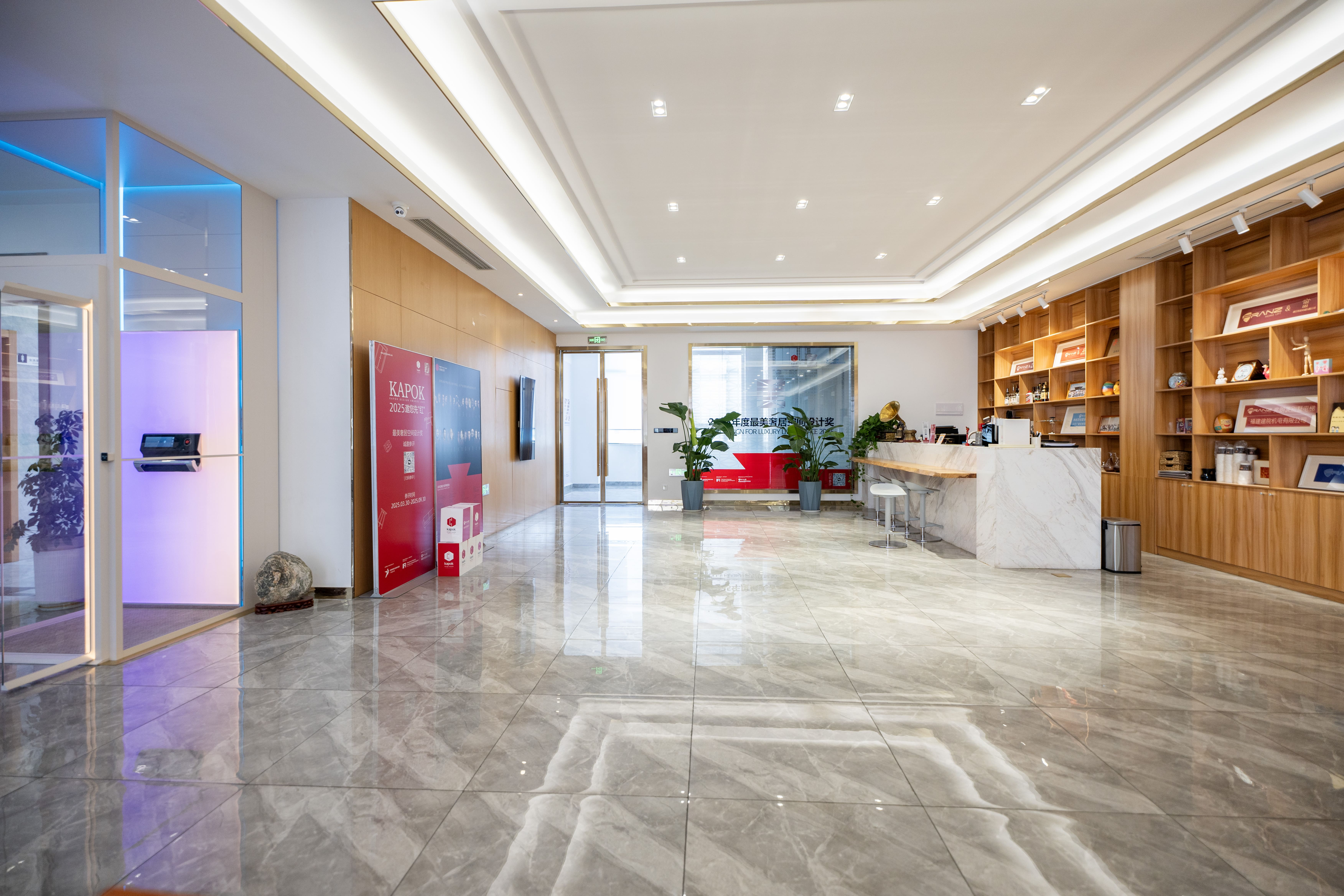
Configuration reviews with buyers cover shaft conditions, drive selection, glass build-up and safety options before quotation.