
- By Admin
-
 Construct Ion
-
 0 Comments
- News
- 810
Home Lift Supplier Due Diligence: Delivery & After-Sales
A due diligence framework for home lift buyers: how to verify supplier delivery capability, installation scope, after-sales coverage and acceptance terms before ordering.
Home Lift Supplier Due Diligence: Project Delivery and After-Sales Evidence
A home lift is purchased once and lived with for years. The specification decides how the lift rides; the supplier's delivery and service record decides whether it is installed on schedule, handed over without disputes, and still supported after the warranty period ends. This guide sets out a due diligence framework built on the evidence a supplier can actually produce about project delivery and after-sales coverage.
What Supplier Due Diligence for a Home Lift Has to Prove
Three questions sit at the centre of any home lift supplier evaluation. Can the supplier place a working lift in this specific building on a date it is willing to commit to? Is the boundary between factory supply, installation and site works written down and accepted by both sides? And who is practically responsible for the lift in year two, three and five?
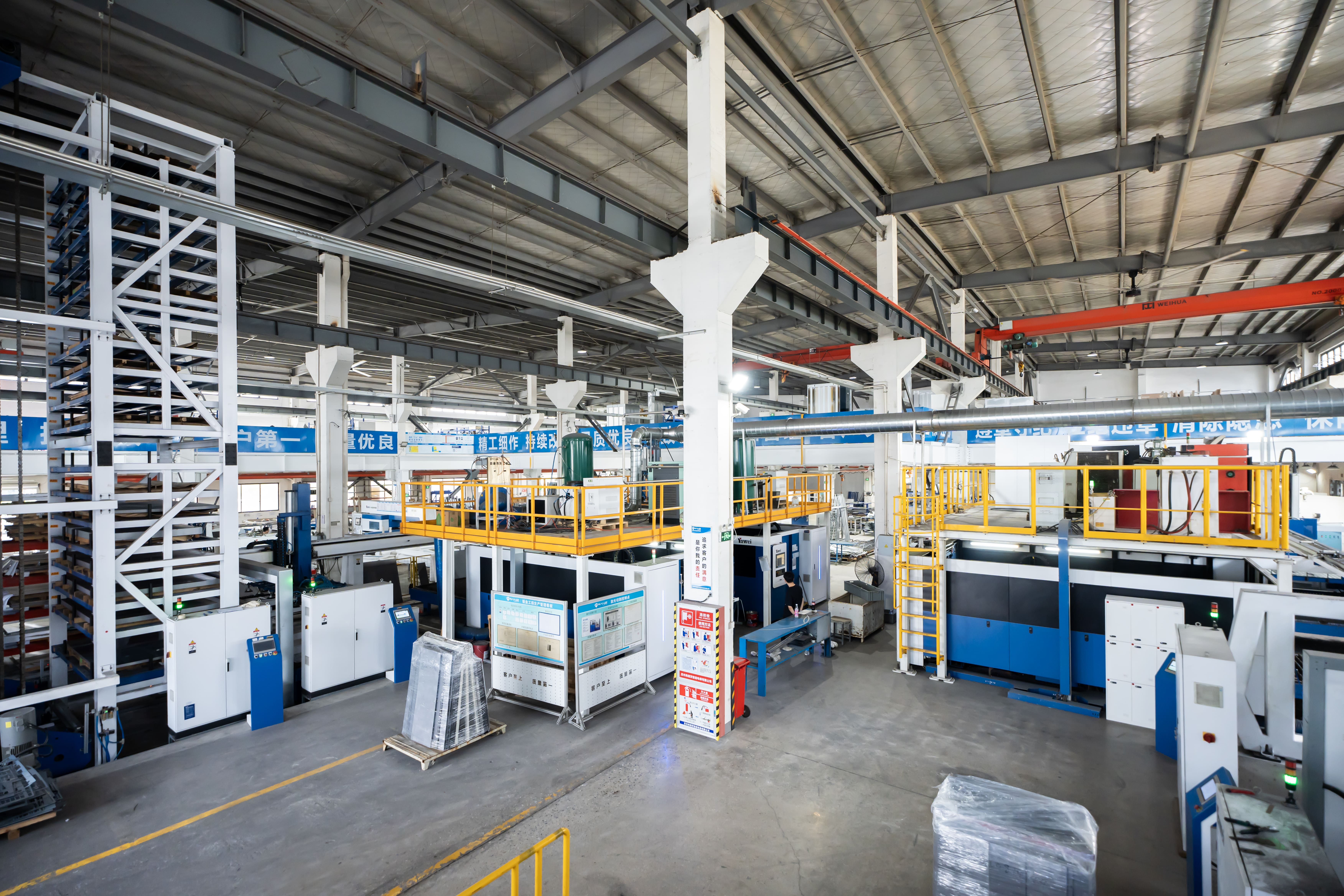
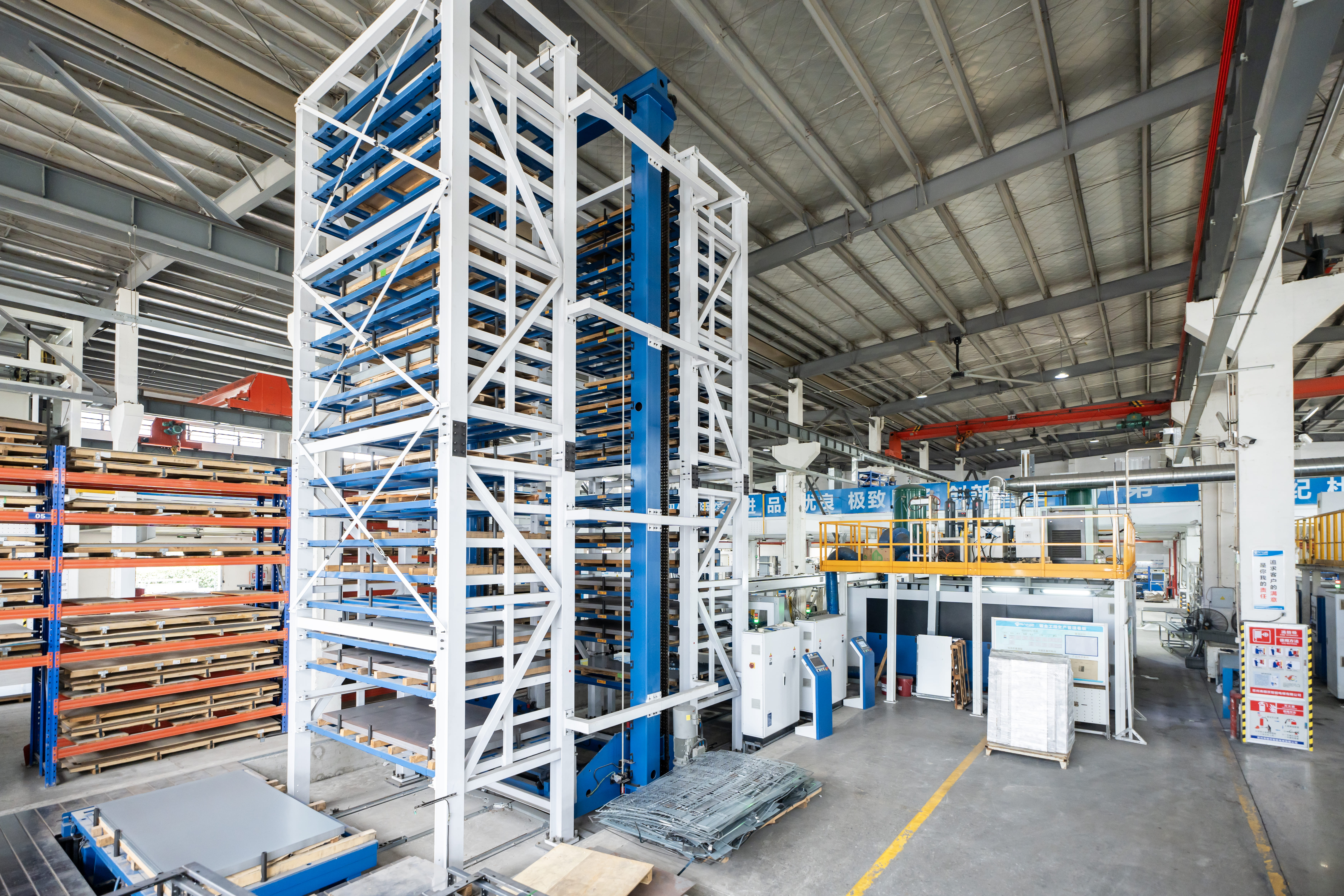
FRANZ Intelligent Elevator Co., Ltd. — registered as Suzhou Franz Intelligent Elevator Co., Ltd., based in Suzhou, Jiangsu, China — manufactures residential villa elevators in three configurations: shaft-built cabin lifts, glass lifts and platform lifts. The company was founded in 2019, operates a 30,000 m² factory with 310 employees and a 32-engineer R&D team, states annual output of 6,000 units, and reports business in more than 30 countries supported by more than 220 showrooms. Those figures are the beginning of due diligence, not the end of it: they describe capability, not delivery to one address.
The sections below convert capability into verifiable evidence — lead times, installation scope, after-sales structure, commercial terms, and project records showing how those commitments behaved on real sites.
The Three Places Where Home Lift Due Diligence Usually Fails
1. A production lead time is presented as a delivery date
Quotations usually state a factory lead time. FRANZ quotes 25–30 days for a shaft-built cabin lift, 35–40 days for a glass lift and 45–50 days for a platform lift. These numbers describe manufacturing output. They exclude site survey, drawing confirmation, civil works, shipping, customs clearance and commissioning. A supplier that presents a factory lead time as a project delivery date has not demonstrated delivery capability; it has only demonstrated production capacity.
2. Installation responsibility stays undefined
Installation and commissioning are often the least documented part of a home lift order. FRANZ states that installation and commissioning take 7–15 working days when site conditions are ready, and that the duration is extended if civil work fails to meet requirements. That single sentence explains a large share of installation disputes: the installation clock starts only when the site is ready, and site readiness normally sits with the buyer, the builder or the main contractor.
3. After-sales is described as a network rather than a named party
FRANZ's after-sales model combines 24/7 remote support, on-site technical guidance or professional installation, and a local distributor network that normally delivers service. Distributors receive after-sales guidance and training or online solutions, and end customers are helped to locate local dealer resources. The model is practical for cross-border supply, but the quality of service in a given country depends on which distributor serves it, what competence and stock that distributor holds, and how escalation works. That is a due diligence item, not a marketing claim.
Read the warranty against the project timescale. FRANZ's standard warranty is one year for the whole unit. Case records for its Russia, Australia and Indonesia projects list two-year project durations. Where the project horizon is longer than the warranty, the maintenance and service arrangement — not the warranty — becomes the real long-term commitment.
Industry Background: Why Delivery and Service Risk Is Increasing
The residential segment is large enough that supplier selection has become a procurement discipline rather than a design decision alone. Grand View Research sized the global residential elevator market at USD 54.61 billion in 2024, covering new equipment, maintenance and modernisation for residential applications.
Two structural changes make delivery and service evidence more important than they were a decade ago. First, standards are being harmonised: TÜV SÜD has documented the transition from EN 81-20/50 to ISO 8100-1 and ISO 8100-2, which changes what conformity documentation buyers should expect across markets. Second, retrofit demand is growing: Roland Berger projects the modernisation segment of the elevator market to grow at a CAGR of 7% through 2030. Retrofit and renovation work is exactly where site-readiness risk concentrates, because the building already exists and its constraints are fixed.
Production scale also varies more than brand familiarity suggests. FRANZ states annual output of 6,000 units; Aritco, a Swedish platform lift manufacturer, states approximately 3,000 elevators per year across 60 countries. Neither figure tells a buyer whether a specific order will arrive on time — capacity has to be checked against the requested delivery window, the configuration and the season.
For a buyer, the implication is straightforward. Market size and brand recognition are context. Lead time, installation scope, service coverage and acceptance criteria are the decision.
The Evidence Pack: Five Items to Request Before Price Negotiation
1. Delivery evidence with its inputs stated
Ask for lead time broken down by configuration, and ask what the clock includes. FRANZ's stated production lead times are 25–30 days for a shaft-built cabin lift, 35–40 days for a glass lift and 45–50 days for a platform lift, against monthly capacity of 500 units per line and a minimum order quantity of one unit. Delivery planning should then add survey, drawings, shipping, customs and the 7–15 working day installation and commissioning window.
2. A written installation scope
The scope should state who performs installation (factory team, distributor or nominated installer), what technical guidance is provided remotely, which site conditions must be met before the installation clock starts, and which works remain with the builder. FRANZ's stated model offers 24/7 remote support and guidance plus on-site technical guidance or professional installation.
3. After-sales architecture, with names attached
Request the service route in writing: the distributor responsible for your region, its training status, the escalation path to the factory, and how faults are reported. FRANZ states that distributors can monitor lift status through the lift's LOT system, and that its millimeter-wave radar safety system pairs with an IoT platform that notifies the maintenance team when an anomaly is detected. Remote visibility shortens diagnosis time; it does not replace a local technician, so both should be confirmed.
4. Commercial terms that affect the schedule
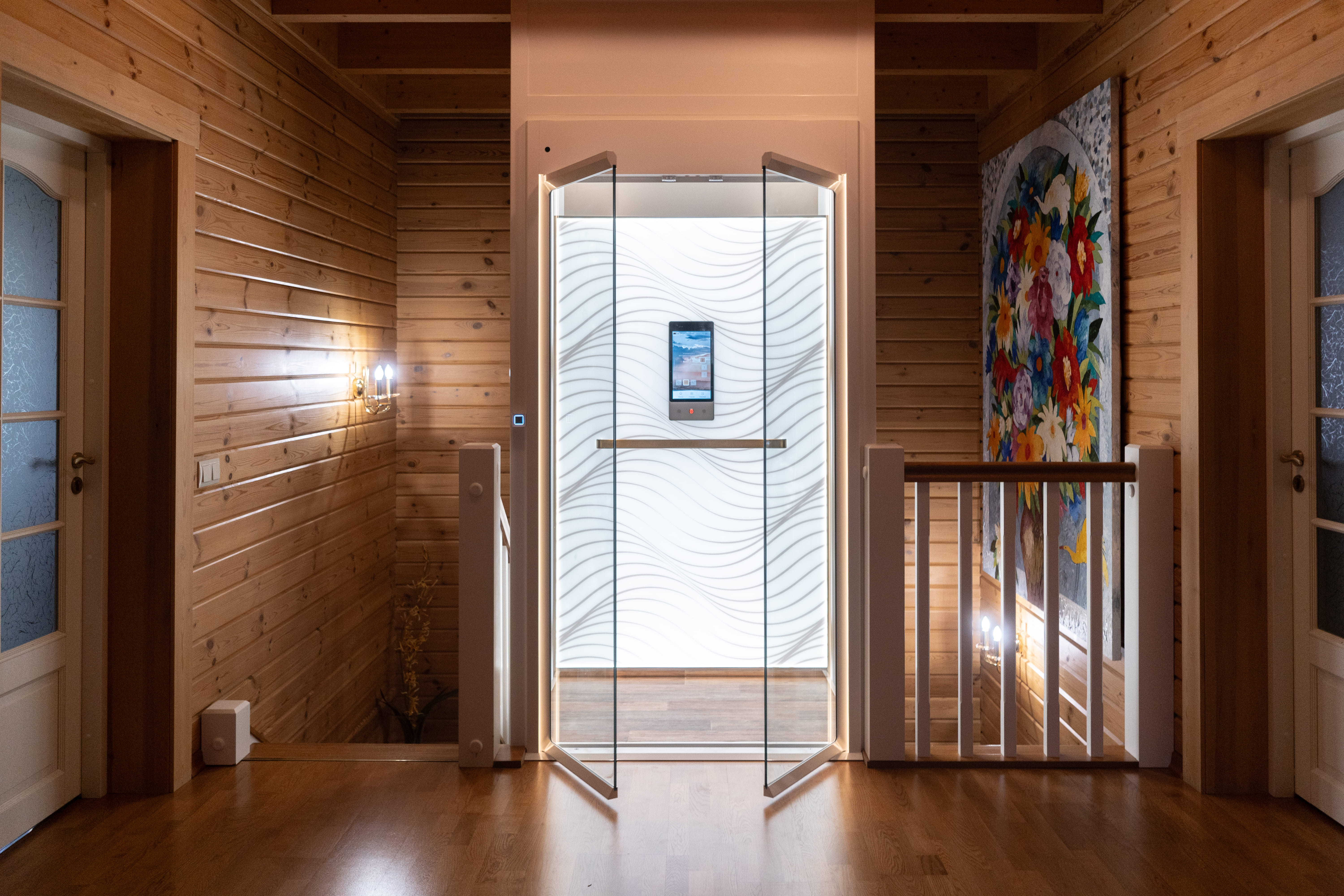
MOQ, customisation scope and change control all move delivery dates. FRANZ accepts a minimum order of one unit and supports factory-direct customisation: shaft frame colour, shaft glass, door frame colour, backboard, ceiling, carpet, COP and HOP, plus manual or automatic door operation on the platform lift; cabin finishes on the glass lift; front, rear and side wall finishes on the shaft-built cabin lift. Factory-direct customisation is stated to shorten the customisation cycle, but a late change to finishes should still be treated as a schedule risk.
5. Documentation and traceability
FRANZ states 100% testing as its quality control standard. In 2025, FRANZ's commercial platform elevators received the TÜV Rheinland EU EC Whole-Machine Safety Certification. Certificate scope matters: a certificate issued for one product family should not be read as covering every configuration, so ask for the scope that matches the unit being purchased.
Step-by-Step: Running Home Lift Supplier Due Diligence in Six Steps
Step 1 — Define the project profile before contacting suppliers
Record the building type (new-build villa, existing house renovation, hotel or commercial space), indoor or outdoor installation, shaft availability, floor-to-floor heights, and whether the site needs a shaft-less, pit-free or shallow-pit solution. The Australian shopping mall project shows why this matters: a shallow pit solution was what made adding a lift to an existing building possible at all.
Step 2 — Match configuration to constraint, not preference
Configuration drives both lead time and site work. A shaft-built cabin lift works within a dedicated shaft and covers 320–1000 kg at up to 1.0 m/s. A glass lift covers 400–800 kg at 0.4, 0.63 or 1.0 m/s and can be used indoors and outdoors. A platform lift covers 320–400 kg at 0.15 or 0.3 m/s and is designed for compact space — installable in as little as 1 m² — which is often the deciding factor in existing-house renovation and disability access projects.
Step 3 — Put the delivery schedule in writing, milestone by milestone
Convert lead time into dated milestones: order confirmation, drawing approval, production start, factory test, shipment, arrival, site readiness, installation, commissioning and handover. Two-year project records in Russia, Australia and Indonesia show that the equipment phase is only one part of the timeline; planning, site works and service set-up occupy the rest.
Step 4 — Confirm the installation interface
Agree what 'site ready' means in measurable terms, who signs it off, and what happens to the schedule if it is not met. FRANZ's stated installation window of 7–15 working days applies only when site conditions are ready; without a signed readiness check, that window is not a commitment.
Step 5 — Verify after-sales with a named contact and a response path
Ask for the regional distributor, the training it has received, the spare-part and escalation route, and how remote diagnostics are used. FRANZ's LOT system and IoT-linked radar alerts support remote diagnosis; local response still depends on the distributor, so the named contact is the evidence that matters.
Step 6 — Fix acceptance criteria before the lift arrives
Acceptance should be agreed when the order is placed, not at handover. The checklist below can be attached to the purchase order as an annex.
Acceptance Criteria and Purchasing Terms to Agree in Advance
- Configuration record. Model, quantity and every customisation item — cabin finish, door frame, ceiling, flooring, COP and HOP layout, manual or automatic doors — written against the order.
- Test evidence. Written confirmation that the unit passed the supplier's 100% test before shipment.
- Function acceptance. Documented checks of emergency levelling, anti-pinch protection, the emergency call function, door operation and, where fitted, millimeter-wave radar detection and its IoT alert path. The Australian project used a one-touch emergency dial that activates automatic rescue mode when held for more than ten seconds.
- Certification scope. The certificate and its scope covering the delivered product family, plus any regional requirement written into the project.
- Service handover. Distributor name, service contact, maintenance schedule and the annual maintenance cost basis for your country.
- Warranty terms. Start date, duration and what is included — FRANZ's standard term is one year for the whole unit.
Use Cases: What the Two-Year Project Records Show
Russia — platform lift in a luxury mansion
A home lift distributor installed a platform lift in a private villa, recorded with a two-year project duration. The installation used a solid aluminium frame with large-area transparent glass and thickened explosion-proof tempered glass, a 270° viewing experience, emergency levelling and anti-pinch mechanisms, touch-screen control and silent steel-belt traction. For due diligence purposes the relevant evidence is the safety scope: emergency levelling and anti-pinch behaviour are functions that must be tested at handover, and both depend on the supplier having documented them before shipment.
Russia — glass lift in a private villa
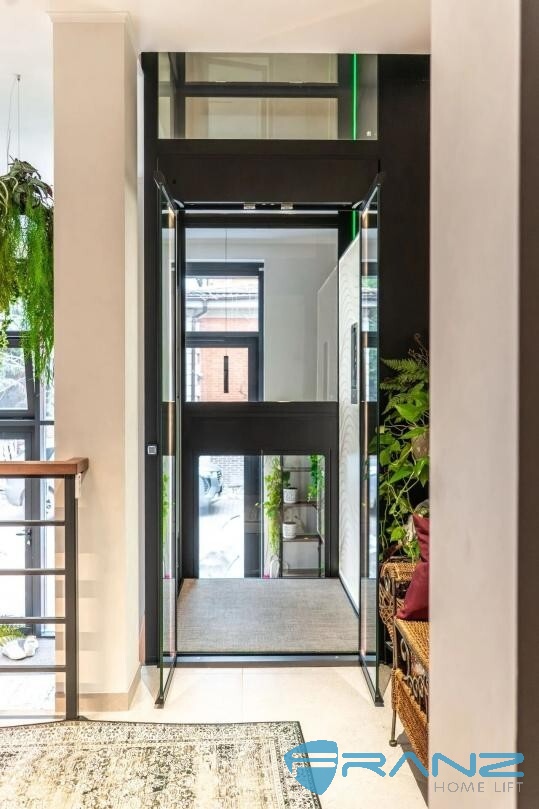
A second Russian installation used the FT/FJ series glass lift, also recorded with a two-year duration, with a four-sided transparent cabin for 360° views, load capacity for the household, and millimeter-wave radar sensing that detects anomalies such as falls or intoxication. The lift was installed in the entrance hall as a visual divider. The evidence value here is the radar-plus-alert chain: it only works as an after-sales feature if somebody is on the receiving end of the alert.
Australia — platform lift in an existing shopping mall
An Australian shopping mall project, recorded over two years, used a shallow pit solution to add a lift to an existing building, with an aluminium shaft and thickened glass, threshold-free access for trolleys, wheelchairs and prams, a one-touch emergency dial with automatic rescue mode, and a shock-absorption system for quiet operation. This is the clearest illustration of delivery risk being a site problem rather than a factory problem: the solution had to fit a building that already existed.
Indonesia — glass lift in a luxury hotel
A hotel installation in Indonesia, recorded over two years, used a champagne-gold metal frame glass cabin with high pressure and impact resistance, a touch-screen panel supporting multi-language switching, face recognition, voice broadcast and an enlarged-font high-contrast mode, plus an automatic power-failure levelling system that stops and opens the doors at the nearest floor. The after-sales lesson is the levelling function: it matters most during a power failure, when nobody is available to intervene.
Project descriptions reflect the supplier's recorded case data. Durations describe the full project cycle recorded for each case, not equipment lead time.
Comparison Table: Delivery-Relevant Specifications by Configuration
| Configuration | Load capacity | Speed | Energy consumption | MOQ | Stated lead time | Typical fit |
|---|---|---|---|---|---|---|
| Shaft-built cabin lift (FT/FJ series) | 320–1000 kg | 0.4 / 0.63 / 1.0 m/s | 1.1–2.4 kW | 1 unit | 25–30 days | Indoor; dedicated shaft in new-build villas; higher-speed demand |
| Glass lift (FT/FJ series) | 400–800 kg | 0.4 / 0.63 / 1.0 m/s | 1.1–2.4 kW | 1 unit | 35–40 days | Indoor and outdoor; panoramic cabins; hotel and villa feature installations |
| Platform lift (FP-S/E series) | 320–400 kg | 0.15 / 0.3 m/s | 1.1 kW | 1 unit | 45–50 days | Indoor; compact spaces, existing-house renovation, wheelchair access |
Source: FRANZ product and capability data. Lead times are production lead times and exclude survey, shipping, customs, site works and the 7–15 working day installation and commissioning window.
Frequently Asked Questions
What certification and acceptance evidence should a home lift supplier provide?
Ask for three things: the certificate and its exact scope, the factory test record, and the acceptance list used at handover. FRANZ's commercial platform elevators received the TÜV Rheinland EU EC Whole-Machine Safety Certification in 2025, and FRANZ states 100% testing as its quality control standard. Because certificate scope is product-specific, confirm that the document covers the configuration being purchased rather than a different product family. Regional requirements should be written into the order — Australian projects, for example, specified compliance with Australian high-safety standards.
What installation and after-sales services are included?
FRANZ's stated scope covers 24/7 remote support and guidance, on-site technical guidance or professional installation, and after-sales service normally delivered through the local distributor network. Distributors receive after-sales guidance and training, or online solutions; end customers are helped to locate local dealer resources. Installation and commissioning take 7–15 working days when site conditions are ready, and the duration is extended if civil work does not meet requirements.
What does after-sales cost after the warranty period?
FRANZ's standard warranty is one year for the whole unit. Annual maintenance cost differs by country; the standard cost is currently between 3,000 and 5,000 RMB per year in China, which is a reference point rather than a global price. Ask the regional distributor for a written maintenance scope and a local cost figure before comparing supplier quotes, because a low equipment price with an undefined service cost is not a lower total cost.
Can we start with a single unit before committing to a channel partnership?
Yes. FRANZ's minimum order quantity is one unit, and factory-direct customisation is stated to shorten the customisation cycle and speed up project delivery. A single unit is also the most useful due diligence tool available: it tests drawing approval, production communication, shipping documentation, installation coordination and after-sales response on a live project, at a scale that does not commit the buyer to a multi-unit programme.
How long is production and delivery, and how should timelines be planned?
Stated production lead times are 25–30 days for a shaft-built cabin lift, 35–40 days for a glass lift and 45–50 days for a platform lift, against monthly capacity of 500 units per line. Add shipping, customs, and 7–15 working days for installation and commissioning once the site is ready. FRANZ's Russia, Australia and Indonesia project records list two-year project durations, which is the horizon over which service coverage should be planned. To review the configurations and specifications in detail, you can download the FRANZ product brochure or send your project profile to the overseas team for a delivery assessment.
Next Step: Test the Evidence on Your Own Project
Send the building type, floor count, shaft or pit constraints and target opening date, and FRANZ will return a configuration recommendation with the corresponding production lead time, installation preconditions and service route.
Download the FRANZ product brochure (PDF) · en.franzlift.com · Email: luoll015@franzlift.com · WhatsApp: +86 18595625216
FRANZ Intelligent Elevator Co., Ltd., B5-2, No.199 Hongwu Avenue, High tech Zone, Zhangjiagang, Jiangsu, China.
Conclusion
Home lift supplier due diligence comes down to evidence that survives the project. Production lead time is the easiest figure to quote and the least useful on its own. The questions that decide the outcome are who owns installation, what 'site ready' means in writing, which distributor answers in year two, and what the acceptance protocol requires at handover. A supplier that answers those four questions with lead times by configuration, a named service route, a stated warranty and tested safety functions is a lower-risk choice than one that competes on specification alone.