
- By Admin
-
 Construct Ion
-
 0 Comments
- News
- 694
Home Lift vs Commercial Brand Elevator for Villas: A 6-Point Decision
Compare a dedicated home lift with a commercial brand home elevator for villas: load, glass cabin options, service scope, purchasing terms and acceptance criteria.
Home Lift vs Commercial Brand Elevator for Villas: A 6-Point Decision
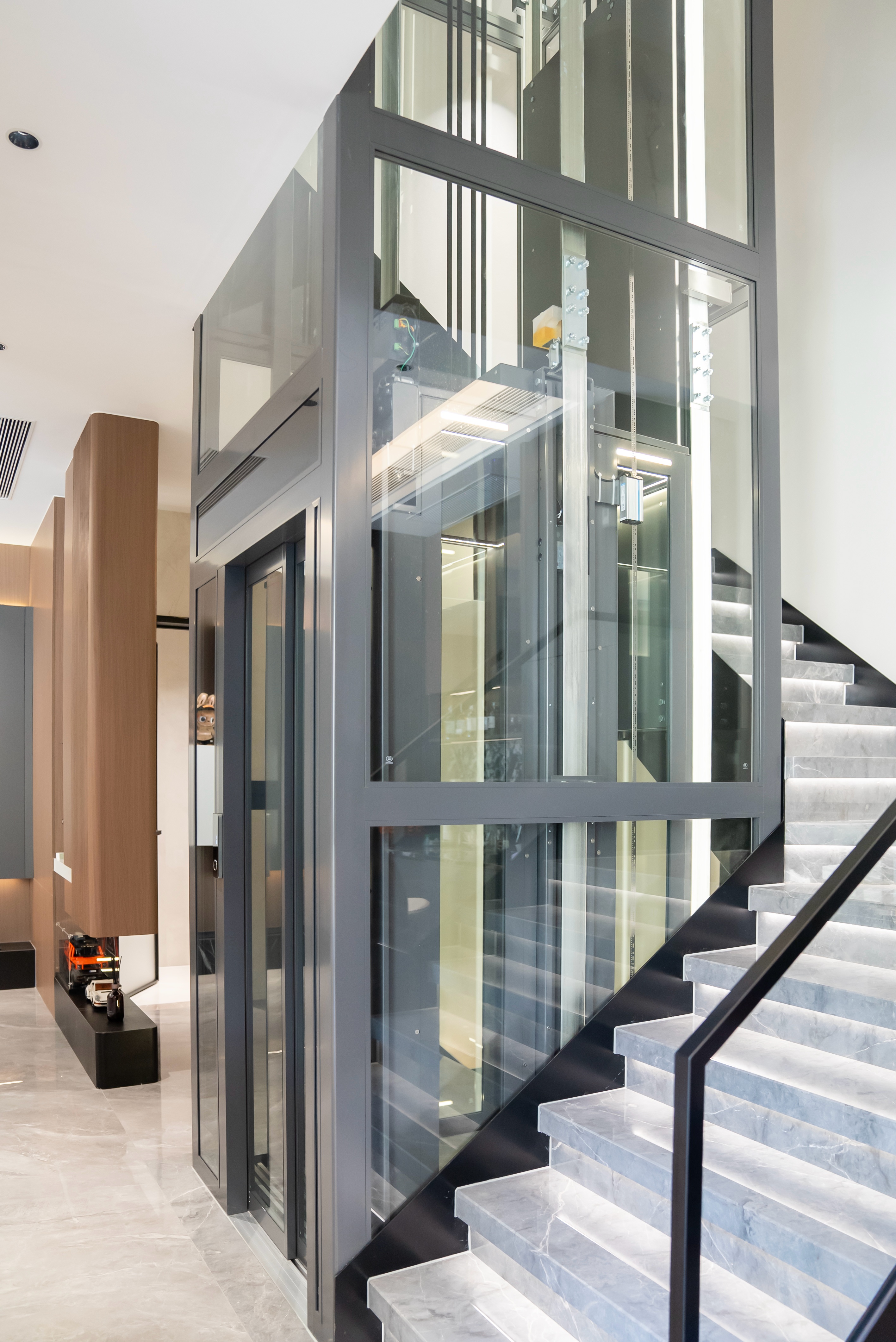
A villa elevator decision usually starts as a brand question and ends as a service question. A dedicated home lift — a product family purpose-built for private residences, such as the FRANZ FT/FJ glass lift, the FT/FJ shaft-built cabin lift or the FP-S/E platform lift — is specified around the house: the shaft you can actually build, the sightline you want to keep, the load your household needs, and the technician who can reach the site in year five. A commercial brand's home elevator is specified around a standardised platform and a global service organisation. Both routes can be correct.
This head-to-head is written for the villa owner, architect or importer who is still at the awareness and research stage and does not yet have a shaft drawing. It separates what a dedicated home lift supplier can document today from what a commercial-brand supplier should be asked to document before you sign.
Choose a dedicated home lift when shaft geometry, glass sightline and finish integration drive the project, and when the supplier can document installation and after-sales coverage in your market — FRANZ, for example, publishes 400–800 kg and 0.4–1.0 m/s for the FT/FJ glass lift and operates more than 220 showrooms across five continents.
Choose a commercial-brand home elevator when procurement requires a standardised product line tied to a project contract, and when your tender documents can carry the full engineering interface yourself.
In both cases the acceptance criteria, the certificate scope and the service route matter more than the logo on the control panel.
1. Problem Definition: why two villa elevator quotes rarely compare line by line
The comparison problem is not the cabin. It is the boundary of supply. Two offers for a villa lift can both say “home elevator, four stops, glass cabin” and still describe different scopes: one may include the shaft structure, the other assumes a builder-provided shaft; one may include commissioning and operator training, the other may stop at delivery.
Four interfaces decide whether a quote is comparable:
- Shaft and pit. Who supplies the structure, and to what tolerance? A glass lift package that includes an aluminium frame and glass shaft removes one contractor from the critical path; a cabin lift assumes a shaft built from bent steel, concrete, wood or brick.
- Civil works. A shallow-pit platform design changes the excavation requirement; a conventional shaft-built lift does not.
- Finishing. Door jambs, frame colour, cabin glass and control cabinet placement are where villa projects lose time.
- Service. Who answers the phone after handover, and who holds the spare parts?
A commercial brand typically resolves these interfaces through a project specification written by an elevator consultant; a dedicated home lift supplier typically resolves them through a configurable product family. Neither approach is inherently safer — but the buyer must know which one is being quoted, because the second is much harder to retrofit into a signed contract.
2. Industry Background: a category maturing around standards and retrofit demand
Residential elevators are no longer a niche add-on to the commercial elevator market. Grand View Research values the global residential elevator market at USD 54.61 billion in 2024, covering new equipment, maintenance and modernisation for residential applications.
Two structural forces shape the villa segment. The first is retrofit and modernisation demand: Roland Berger projects the modernisation segment to grow at a CAGR of 7% through 2030, which reflects an installed base of houses that were built without a lift and are now being adapted. The second is regulatory harmonisation: TÜV SÜD reports that ISO 8100-1 and ISO 8100-2 are replacing EN 81-20/50, with a stated effective date of 1 March 2026, which pushes suppliers to document safety functions against a single international framework rather than national variants.
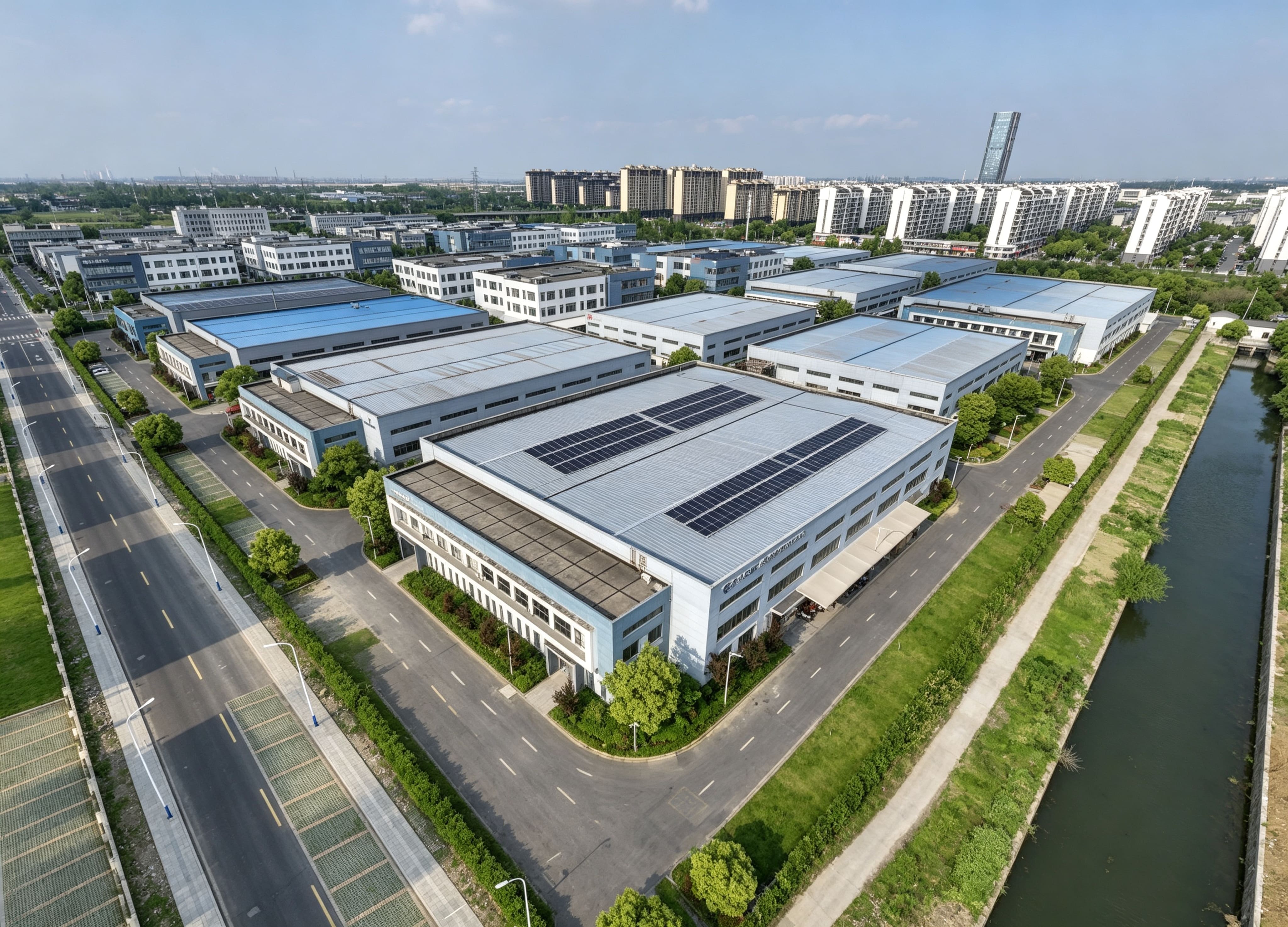
The supply side is correspondingly mixed. Aritco, a Swedish platform lift manufacturer, reports production of approximately 3,000 elevators per year and operations in 60 countries — a scale profile typical of a specialised residential brand. FRANZ Intelligent Elevator Co., Ltd., established in 2019 and headquartered in Suzhou, Jiangsu, China, is an independent R&D manufacturer of residential elevators for villas with a 30,000 m² facility, approximately 310 staff including a 32-engineer R&D team, an annual production capacity of 6,000 units, more than 220 showrooms and operations across five continents and over 30 countries, with export accounting for 15% of total sales.
Against that, commercial brand home elevators are sold by organisations whose primary business is passenger and freight transport in commercial buildings. Their villa products inherit commercial engineering discipline and, frequently, commercial contract terms. That inheritance is the actual subject of this comparison.
3. Detailed Solution: how a dedicated home lift is built for a villa
FRANZ's main products are three premium home lift families. Each answers a different villa constraint, and the differences are specification-level rather than cosmetic.
FT/FJ glass lift — the sightline solution
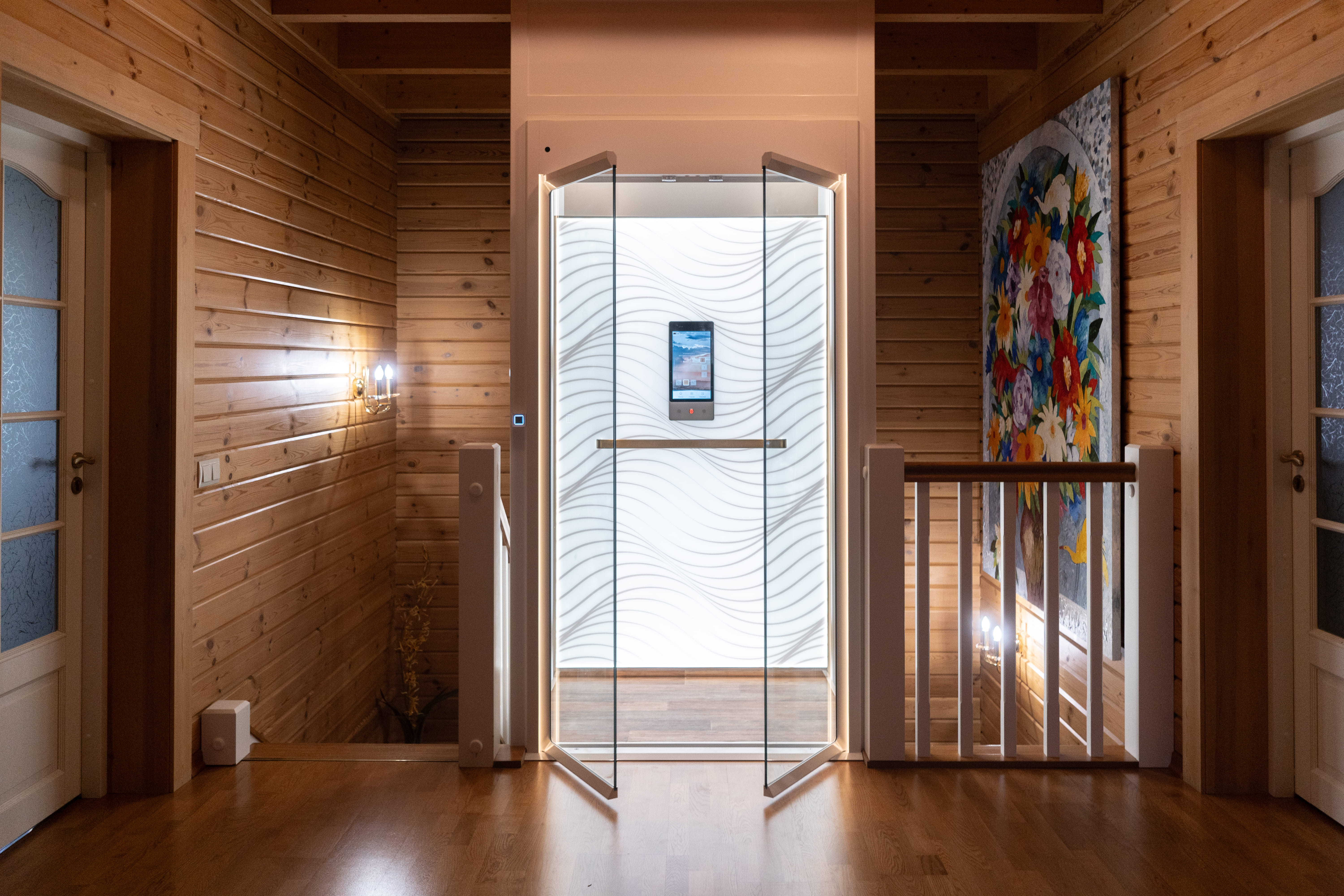
The FT/FJ glass lift is a sightseeing-glass lift built from an aluminium frame with a glass shaft and a glass cabin. Rated load is 400–800 kg at 0.4, 0.63 or 1.0 m/s, with traction steel belt or wire rope and drum drive, and energy consumption of 1.1–2.4 kW. It is suitable for indoor and outdoor use in residential housing and public commercial spaces. The full-glass cabin and shaft deliver a 360° viewing experience, colours and accessories are customisable to match interior style, and the control cabinet is integrated and built in to save space.
FT/FJ shaft-built cabin lift — the privacy and speed solution
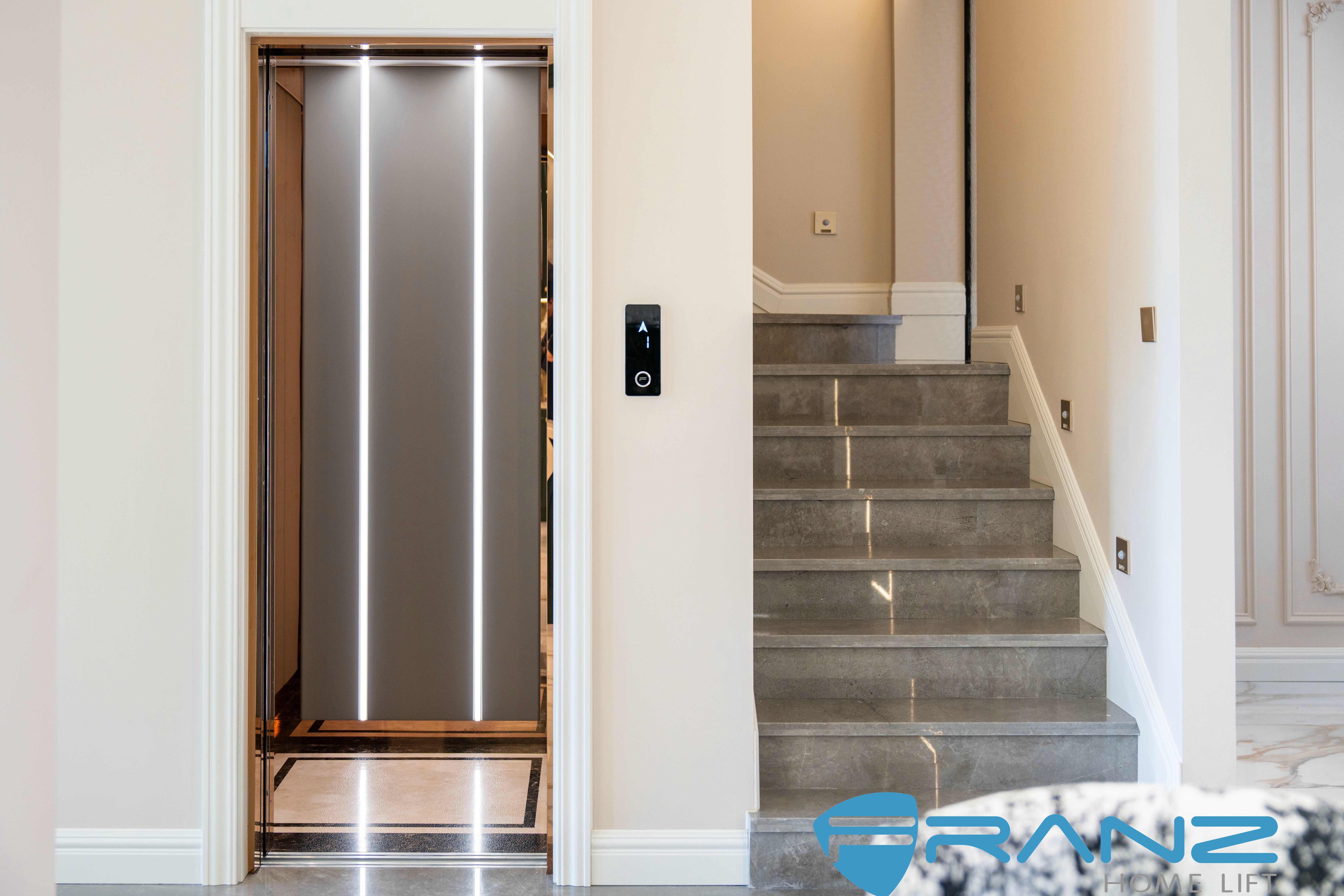
The same FT/FJ designation also covers a non-sightseeing cabin lift designed for installation inside a dedicated shaft, with shaft material options including bent steel structure, concrete, wood and brick. Rated load is 320–1000 kg at 0.4, 0.63 or 1.0 m/s, with traction steel belt or wire rope and drum drive, and 1.1–2.4 kW energy consumption, for indoor use in residential houses and public commercial spaces. Installation inside a dedicated shaft gives high overall rigidity and strong load capacity, which is the configuration to choose when speed or heavy use matters; custom-made door jambs blend with the interior and improve privacy.
FP-S/E platform lift — the retrofit and accessibility solution
The FP-S/E series is a sightseeing-platform lift with an aluminium frame, glass shaft and platform. Rated load is 320–400 kg at 0.15 or 0.3 m/s, energy consumption 1.1 kW, indoor use only. Its shallow-pit high-efficiency design can be installed in as little as 1 m² of space, and steel-belt traction with a silent system is specified for library-level quietness. It is intended for small spaces, existing houses and wheelchair accessibility, and it serves residential housing, public commercial space, office buildings and barrier-free accessibility engineering.
The safety layer that sits across all three families
FRANZ has developed a proprietary active millimetre-wave radar situational awareness safety system for residential elevators. The system emits electromagnetic waves and continuously senses human presence and posture inside the cabin; if it detects an anomaly such as a fall or prolonged inactivity, it triggers an alert without manual intervention. Paired with an IoT platform, it notifies the maintenance team of an abnormal situation. This is the clearest functional difference between a purpose-built home lift and a commercial elevator product: the safety logic is designed for an unsupervised private household, not for a staffed public building.
Manufacturing context matters for a villa buyer because it determines how far customisation can go. FRANZ operates as an independent R&D manufacturer rather than an assembly-only brand, with 32 engineers, a 30,000 m² facility and 6,000 units of annual capacity. In 2025, FRANZ's commercial platform elevators received the TÜV Rheinland EU EC Whole-Machine Safety Certification, making the brand one of the first domestic elevator brands to obtain that certification; the same year, FRANZ was designated the official residential elevator partner for Dragon TV's Dream Home.
4. Step-by-Step Breakdown: the six-point decision
Point 1 — Start with shaft and pit geometry, not the brand
Measure what exists. A villa with a masonry or concrete shaft and a pit already formed is a cabin-lift project: the FT/FJ shaft-built configuration accepts bent steel, concrete, wood or brick shafts and reaches 1000 kg. A villa with a stairwell void and no pit is a platform project: the FP-S/E needs as little as 1 m² and uses a shallow-pit design. A villa that wants the lift to be part of the architecture is a glass-lift project: the FT/FJ glass lift carries its own aluminium frame and glass shaft. Asking a commercial-brand supplier to solve a no-pit problem usually converts the project into civil works.
Point 2 — Decide the sightline before the finishes
A full-glass cabin and shaft gives a 360° view and turns the lift into a visible object in the room. That is a design commitment, not an accessory. If the household prefers privacy, the shaft-built cabin lift with custom door jambs is the coherent choice. Glass lift colours and accessories are customisable, so frame tone and cabin detailing can follow the interior rather than fight it — but the decision has to be made before the shaft opening is dimensioned.
Point 3 — Confirm rated load, speed and energy against real household use
For a private villa the working range is usually 400–800 kg for the glass lift, up to 1000 kg for the shaft-built lift, and 320–400 kg for the platform lift. Speed follows the number of stops and the household's patience: 0.15–0.3 m/s is normal for a platform serving a split level, while 0.4–1.0 m/s suits a shaft serving four or more floors. Energy consumption of 1.1 kW for the platform lift and 1.1–2.4 kW for the FT/FJ series is a specification you can put into a running-cost estimate before signing.
Point 4 — Specify the safety and accessibility layer explicitly
Write the sensing requirement into the order. Millimetre-wave radar that detects presence and posture, triggers an alert on a fall or prolonged inactivity and pushes notification through an IoT platform is a different proposition from a simple emergency stop. If the lift is also meant to serve a wheelchair user, say so at specification stage: the FP-S/E platform lift is explicitly intended for disability access, and the glass lift range includes an automatic power-failure levelling system in documented commercial installations.
Point 5 — Define service scope and who answers in year five
Ask where the nearest technician is, not whether service is available. FRANZ's model is online 24/7 remote support plus offline on-site technical guidance or professional installation; after-sales normally runs through the local distributor network, with distributors receiving after-sales guidance and training, and end customers being helped to locate local dealer resources for localised service. The lift also carries a LOT system so distributors can check lift status at any time. A commercial-brand offer will describe a global service organisation — ask it to name the local technician and the parts route for your postcode.
Point 6 — Fix purchasing terms and acceptance criteria in writing
Comparable terms include the warranty period — one year for the whole unit under FRANZ's standard terms — the installation window of 7–15 working days once site conditions are ready, with extension where civil work does not meet requirements, and factory-direct customisation that shortens the customisation cycle. Acceptance criteria should list rated load and speed as ordered, glass specification and certificates, radar function tested against a simulated fall, emergency leveling and call functions, measured noise at the bedroom-adjacent wall recorded in the handover file, and a documentation package covering the certificate scope, wiring diagram, maintenance schedule and spare-parts list.
A four-stop villa with a central stairwell and a client who wants the lift to be visible: FT/FJ glass lift at 400–800 kg and 0.4–1.0 m/s, aluminium frame with glass shaft and glass cabin for a 360° view, indoor installation, integrated built-in control cabinet, millimetre-wave radar sensing in the cabin with IoT alerting. Russia is one of FRANZ's major markets alongside Southeast Asia, Australia, the Middle East and Africa, and FRANZ has documented Russian luxury-mansion experience with millimetre-wave radar cloud detection, vibration damping and thickened tempered glass. Where a shaft already exists, the same villa would instead specify the FT/FJ shaft-built cabin lift up to 1000 kg.
5. Use Cases: which villa profile fits which configuration
New-build luxury villa with a formed shaft. FT/FJ shaft-built cabin lift, 320–1000 kg at 0.4–1.0 m/s. Highest rigidity and load capacity, best fit where speed matters or where the lift must serve a large household with staff and luggage.
Villa with an architectural void or courtyard view. FT/FJ glass lift, 400–800 kg, aluminium frame with glass shaft and glass cabin for a 360° view. Colours and accessories customised to the interior, control cabinet integrated into the structure.
Existing house, small footprint, or step-free access requirement. FP-S/E platform lift, 320–400 kg, 0.15–0.3 m/s, from 1 m² of space with a shallow-pit design, steel-belt traction and silent system. This is the retrofit and wheelchair-access configuration.
Garden or terrace access. The FT/FJ glass lift is rated for both indoor and outdoor use, which allows a single product family to serve a villa where the lift travels between an interior hall and an outdoor terrace.
6. Comparison Table: home lift vs commercial brand home elevator
Every figure in the middle column is taken from published FRANZ product specifications. The right-hand column lists the equivalent evidence to request from a commercial-brand supplier so the two offers can be read side by side.
| Decision dimension | Dedicated home lift (FRANZ FT/FJ, FP-S/E) | Commercial-brand home elevator — what to verify |
|---|---|---|
| Rated load | FT/FJ glass lift 400–800 kg; FT/FJ shaft-built 320–1000 kg; FP-S/E platform 320–400 kg | Confirm the rated load and car dimensions of the specific model offered, not the product-line maximum |
| Speed | 0.4 / 0.63 / 1.0 m/s (FT/FJ); 0.15 / 0.3 m/s (FP-S/E) | Ask for the speed of the quoted model and whether it changes with the number of stops |
| Drive and energy | Traction steel belt or wire rope; drum drive; 1.1–2.4 kW (FT/FJ); 1.1 kW (FP-S/E) | Request drive type and rated power in the technical annex |
| Cabin and shaft | Aluminium frame with glass shaft and glass cabin (glass lift); bent steel, concrete, wood or brick shaft (shaft-built) | Clarify who supplies the shaft and who owns the civil interface |
| Safety sensing | Proprietary active millimetre-wave radar for presence and posture, with IoT alert to the maintenance team | Ask which sensing functions are included and how an alert reaches a service team |
| Certification | TÜV Rheinland EU EC Whole-Machine Safety Certification (2025, commercial platform elevators) | Match the certificate scope, load and speed rating to the model being purchased |
| Service scope | 24/7 online remote support; offline on-site technical guidance or professional installation; distributor after-sales network; LOT remote lift status | Ask for the name of the local technician and the spare-parts route |
| Warranty | 1 year for the whole unit (standard terms) | Compare term length and exclusions, not just the headline period |
| Installation window | 7–15 working days for installation and commissioning if site conditions are ready | Request a schedule with explicit civil-works dependencies |
| Manufacturing base | 30,000 m² facility, 6,000 units annual capacity, approx. 310 staff, 32 R&D engineers, 220+ showrooms, 5 continents and 30+ countries | Request factory audit access and reference installations in your market |
Prices are not shown because a villa lift is quoted against shaft conditions and finish specification; request a project-specific quotation instead of comparing list figures.
7. FAQ
What certification should I check before accepting a villa home lift?
Match the certificate to the product actually quoted. In 2025, FRANZ's commercial platform elevators received the TÜV Rheinland EU EC Whole-Machine Safety Certification, and the brand was among the first domestic elevator brands to obtain it; the certificate applies to platform lift products. If your villa order is for an FT/FJ glass lift, ask the supplier to show which certificate scope, load and speed rating cover that model. The wider framework matters too: TÜV SÜD reports that ISO 8100-1 and ISO 8100-2 are replacing EN 81-20/50, with a stated effective date of 1 March 2026, so a certificate issued only against an older framework should be read with that transition in mind.
Can a dedicated home lift match a commercial-brand elevator on load and speed?
Within the ranges FRANZ publishes, yes, and the limits should be checked against the household. The FT/FJ glass lift is rated 400–800 kg at 0.4, 0.63 or 1.0 m/s. The FT/FJ shaft-built cabin lift is rated 320–1000 kg at the same three speeds. The FP-S/E platform lift is rated 320–400 kg at 0.15 or 0.3 m/s. Energy consumption is 1.1–2.4 kW for the FT/FJ series and 1.1 kW for the FP-S/E. For most private villas the decision sits between the 400–800 kg glass range and the 1000 kg shaft-built ceiling; 1.0 m/s becomes relevant once the lift serves four or more stops.
What running and maintenance cost should I plan for?
Start from energy and then add maintenance. Energy consumption is 1.1 kW for the FP-S/E platform lift and 1.1–2.4 kW for the FT/FJ series. Maintenance pricing differs by country: FRANZ states a standard cost of currently between 3,000 RMB and 5,000 RMB per year in China, and different countries have different price levels. The standard warranty is one year for the whole unit. Ask for the maintenance schedule and the spare-parts list with the quotation so annual figures are comparable across offers rather than based on different assumptions.
How can I validate a home lift before signing?
Use showroom access and documentation. FRANZ operates more than 220 showrooms and has business operations spanning five continents and over 30 countries, with major markets including Southeast Asia, Russia, Australia, the Middle East and Africa; the published catalogue covers the FT/FJ and FP-S/E configurations. Online support is 24/7 remote, and offline support is on-site technical guidance or professional installation. For distributors, FRANZ provides after-sales guidance and training; for end customers, it helps locate local dealer resources for localised service. A site visit plus a specification review of load, speed and shaft conditions is more informative than a brochure comparison.
What is the installation window, and who services the lift afterwards?
If site conditions are ready, installation and commissioning take 7–15 working days; the duration extends if civil work fails to meet requirements. Factory-direct customisation is intended to shorten the customisation cycle and speed up project delivery. After-sales normally runs through the local distributor network, and the lift's LOT system lets distributors check lift status at any time. For a villa in Russia, Australia or the Middle East, confirm the nearest service point and the response route in writing before ordering. To review the full configuration range, download the FRANZ civil and glass lift catalogue.
8. Conclusion: decide on evidence, then choose the category
The head-to-head does not produce a universal winner, but it does produce a decision order. Shaft and pit geometry eliminates one configuration immediately. Sightline and privacy preference eliminates another. Rated load, speed and energy then have to sit inside the household's real use, and the safety layer has to be specified rather than assumed. Only after those four points does service scope and purchasing terms become a fair comparison — because at that stage you are comparing two offers with the same boundary of supply.
A dedicated home lift built by an independent R&D manufacturer such as FRANZ keeps shaft structure, glass cabin, millimetre-wave radar sensing, installation guidance and warranty inside one product family, which shortens the interface list on a private villa. A commercial-brand home elevator brings a standardised platform and a global contract structure, which suits projects where the engineering interface is already managed by a consultant. Villa owners most often regret the third option: choosing on brand familiarity and discovering the shaft, the service route or the acceptance criteria were never written down.
Request a villa-specific configuration and quotation
Send your shaft dimensions, number of stops and preferred cabin style. FRANZ will reply with a matching FT/FJ or FP-S/E configuration, the applicable certificate scope, installation window and commercial terms.
Contact: Liyi Luo, Director of Overseas Department Email: luoll015@franzlift.com | Tel / WhatsApp: +86 18595625216 Address: B5-2, No.199 Hongwu Avenue, High tech Zone, Zhangjiagang, Jiangsu, China Website: en.franzlift.com | Catalogue: Franz-Civil & glass lift catalogue (PDF)