
- By Admin
-
 Construct Ion
-
 0 Comments
- News
- 341
Home Lift Technical Guide: Load, Speed, Pit Depth & Noise Parameters
Technical selection guide for home lifts: 320-1000 kg load ranges, 0.4/0.63/1.0 m/s speed options, shallow-pit retrofit design, steel-belt traction, mmWave radar safety and long-term supplier checks.
Home Lift Technical Guide: Load, Speed, Pit Depth & Noise Parameters
Home lift specification is decided by four measurable parameters — rated load in kilograms, travel speed in metres per second, pit depth and headroom, and drive noise — plus one commercial parameter that only becomes visible years later: whether the manufacturer still supplies the same platform, the same components and the same technical support at that point. Two quotations can look almost identical on paper while describing very different machines, because a load value, a speed step and a pit tolerance each change the drive sizing, the shaft construction and the long-term serviceability of the finished installation.
This guide is written for specifiers, importers and villa developers at the decision and execution stage — buyers who have already decided to install a residential lift and now need to compare configurations on published data rather than on presentation. It uses the published parameters of the FRANZ shaft-built cabin lift (FT/FJ series), glass lift (FT/FJ series) and platform lift (FP-S/E series), FRANZ's published comparison data for steel-belt traction drive, and the application scenarios the company publishes for villa, retrofit, commercial and hospitality projects. Where an absolute figure such as a decibel value for a specific model is not published, this guide says so instead of filling the gap with an estimate.
FRANZ Intelligent Elevator Co., Ltd. (Suzhou Franz Intelligent Elevator Co., Ltd.) is a China-based manufacturer founded in 2019 that specialises in the research, development, smart manufacturing, sales, installation and maintenance of residential elevators for villas. The company operates a 30,000 m² factory with 310 employees, including a 32-engineer R&D team, and reports an annual output capacity of 6,000 units.
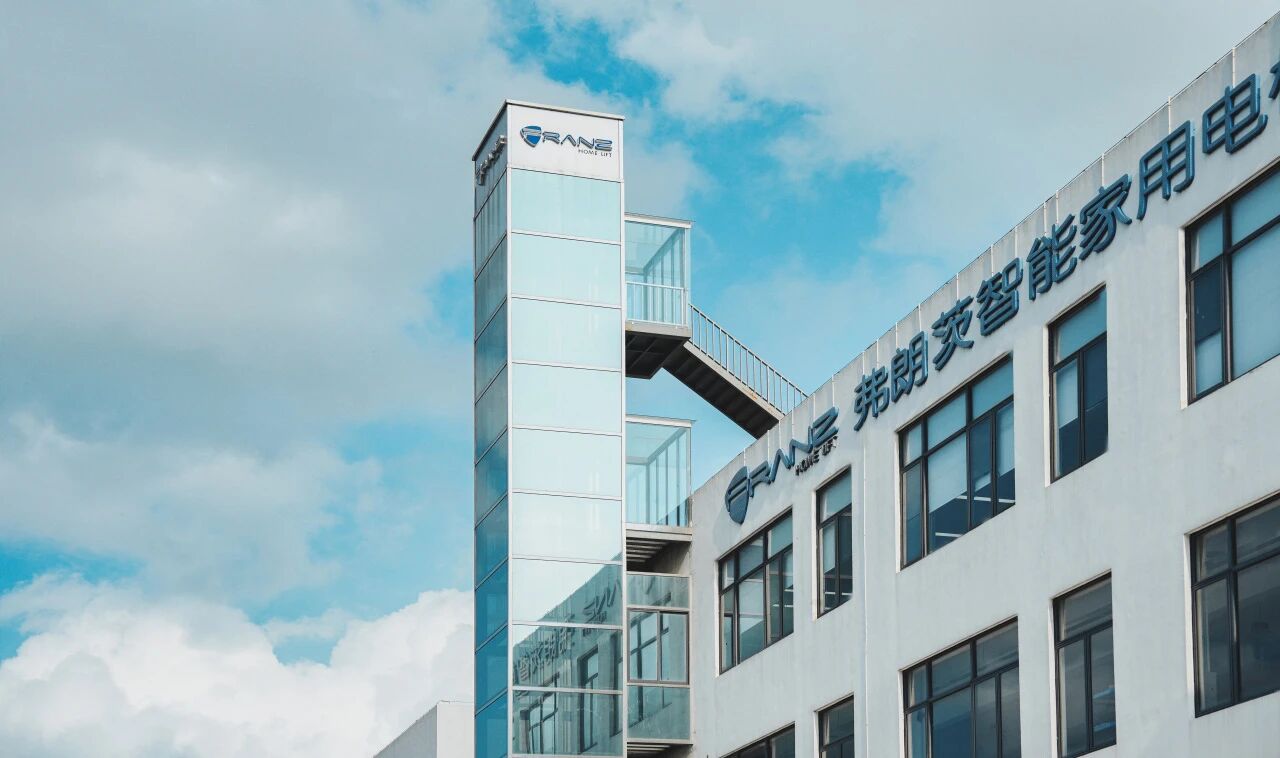
Production of residential lift systems at FRANZ Intelligent Elevator Co., Ltd., Suzhou, Jiangsu, China.
Problem Definition: Home Lift Projects Usually Fail on Parameters, Not on Style
The most expensive problems in residential lift projects are rarely aesthetic. They are dimensional and documentary: a model ordered against a standard shaft drawing that does not match the actual pit depth, floor height or door opening on site; a certificate that does not match the destination market; a spare-parts commitment that quietly ends after the first order.
FRANZ's published purchasing-risk guidance identifies five categories that every specifier should test a supplier against before signing:
- Suitability risk — the model does not fit the shaft, pit or floors, or the shaft conditions on site are poor.
- Quality risk — low-quality core components, sub-standard drive units and door assemblies lead to frequent failures and potential safety hazards.
- Craftsmanship risk — poor welding, frame and connection workmanship produces noise, vibration and faster component wear.
- Certification risk — no valid certification matched to the target market.
- Delivery and after-sales risk — unclear lead time, hidden charges, or discontinued spare parts and maintenance service, especially on OEM units that lack original-manufacturer support.
Industry Background: A Retrofit-Driven Market Under a Changing Standard
Residential vertical transportation is a large segment that is currently being reshaped by retrofit demand. Grand View Research valued the global residential elevator market at USD 54.61 billion in 2024, and Roland Berger projects the Modernization segment of the elevator market to grow at a CAGR of 7% through 2030. Both signals point at the same buyer: an existing building that was never designed around a lift and now needs one.
Regulation is moving in parallel. TÜV SÜD has reported the transition from EN 81-20/50 to ISO 8100-1 and ISO 8100-2 as a step towards harmonised global elevator safety standards, with a stated effective date of 1 March 2026. The practical effect for specifiers is that certification evidence should be checked against the destination market rather than assumed from a supplier's general claims.
The supply side mixes specialists and generalists. Aritco Lift AB, a Sweden-based platform lift manufacturer, produced approximately 3,000 elevators per year as of late 2025 and operates in 60 countries. On the manufacturing side, FRANZ reports an annual output capacity of 6,000 units, an export ratio of 15%, operations across five continents and more than 30 countries — including Russia, Australia and Indonesia — and more than 220 showrooms. In 2025, the company's commercial platform elevators received the TÜV Rheinland EU EC whole-machine safety certification.
For a technical specification, the relevant conclusion is narrow: retrofit-driven demand rewards configurations that tolerate shallow pits, small shafts and existing staircases, and it rewards manufacturers who publish parameter data instead of negotiating each project from zero.
Detailed Solution: The Parameters That Decide a Home Lift Configuration
FRANZ publishes three residential product families, and the differences between them are measurable rather than decorative. The sections below work through each parameter in the sequence a specifier normally encounters it.
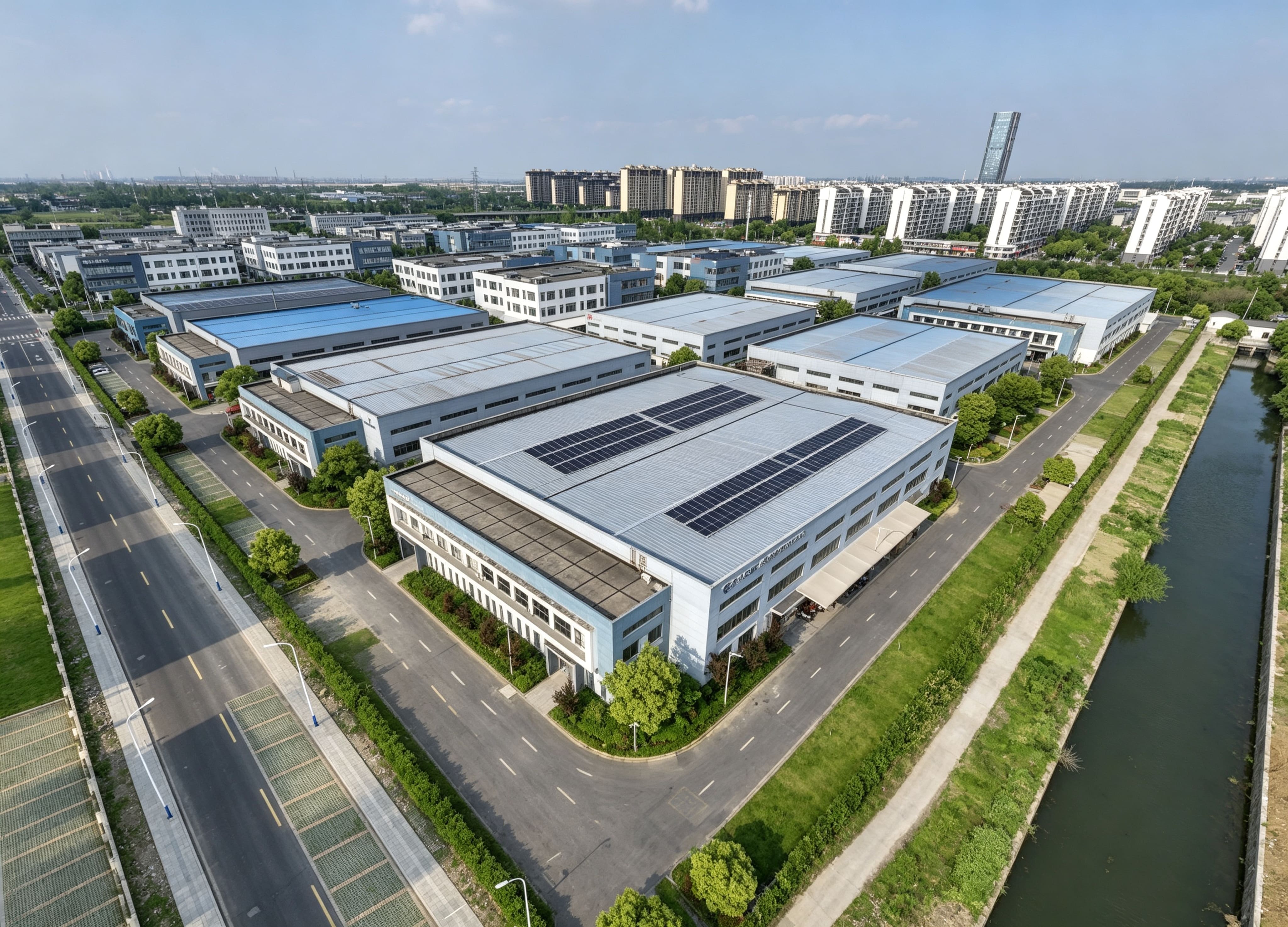
Production line for the FT/FJ cabin and glass lift families and the FP-S/E platform lift family.
1. Rated load: 320–1000 kg depending on product family
Published load capacity differs by family, and the difference is structural rather than commercial:
- Shaft-built cabin lift (FT/FJ series): 320–1000 kg.
- Glass lift (FT/FJ series): 400–800 kg.
- Platform lift (FP-S/E series): 320–400 kg.
The 400–800 kg band is the published range of the glass lift family and covers typical villa passenger requirements as well as wheelchair access configurations used in barrier-free accessibility engineering. Load should not be selected as a more-is-better value: it drives car dimensions, shaft footprint and energy draw. The same published data set lists energy consumption of 1.1–2.4 kW for the cabin and glass families and 1.1 kW for the platform lift.
2. Travel speed: 0.4, 0.63 or 1.0 m/s — and 0.15 or 0.3 m/s for platform lifts
Published speed options are stepped, not continuous:
- Cabin lift FT/FJ: 0.4 m/s, 0.63 m/s, 1.0 m/s.
- Glass lift FT/FJ: 0.4 m/s, 0.63 m/s, 1.0 m/s.
- Platform lift FP-S/E: 0.15 m/s, 0.3 m/s.
FRANZ positions home-use traction elevators as reaching 0.3–1 m/s, which places the cabin and glass families at the upper end of that band and the platform family below it. Speed should be selected against the number of stops served, the acceptable travel time and the comfort target — not against commercial elevator benchmarks. A three-stop villa lift running at 0.4 m/s and one running at 1.0 m/s are different products once drive sizing, ride tuning and energy use are taken into account.
3. Pit depth, headroom and shallow-pit retrofit design
Pit depth is where retrofit projects are won or lost. FRANZ supports zero-pit and ultra-shallow-pit self-supporting shaft solutions for limited civil conditions, in contrast to suppliers that require a deep pit and high overhead height with heavy civil work. The published application configuration for an office and shopping mall project in Australia uses a shaft-less and pit-free installation solution with an aluminium frame and laminated tempered glass, plus a threshold-free flat-floor design for disabled access. FRANZ's comparison data likewise positions home-use traction lifts as suitable for retrofit and small-size residential projects.
Before any model is quoted, four site values should be measured and recorded: shaft width and depth, pit depth, floor-to-floor height, and door sizes. The project type — new build or renovation — and the finishing requirement belong in the same brief.
4. Drive technology and noise parameters
The published drive modes for the cabin and glass families are traction steel belt, wire rope, or drum drive. Within that set, FRANZ's comparison data positions steel-belt traction as the low-noise route:
- Operating noise is 15–25 dB lower than a screw-type drive.
- Purchase cost is approximately 10% lower than a screw elevator.
- The mechanical structure is simple, with less maintenance and higher efficiency.
- Against traditional traction elevators, home-use traction is positioned with no oil leakage risk, higher travelling speed, moderate purchase cost, lower maintenance cost and lower energy consumption.
Noise is also a workmanship outcome rather than a component specification alone. FRANZ's risk guidance notes that poor welding, frame and connection workmanship produces noise, vibration and faster component wear — which is why factory inspection and sample-lift review are listed as mitigation steps before ordering.
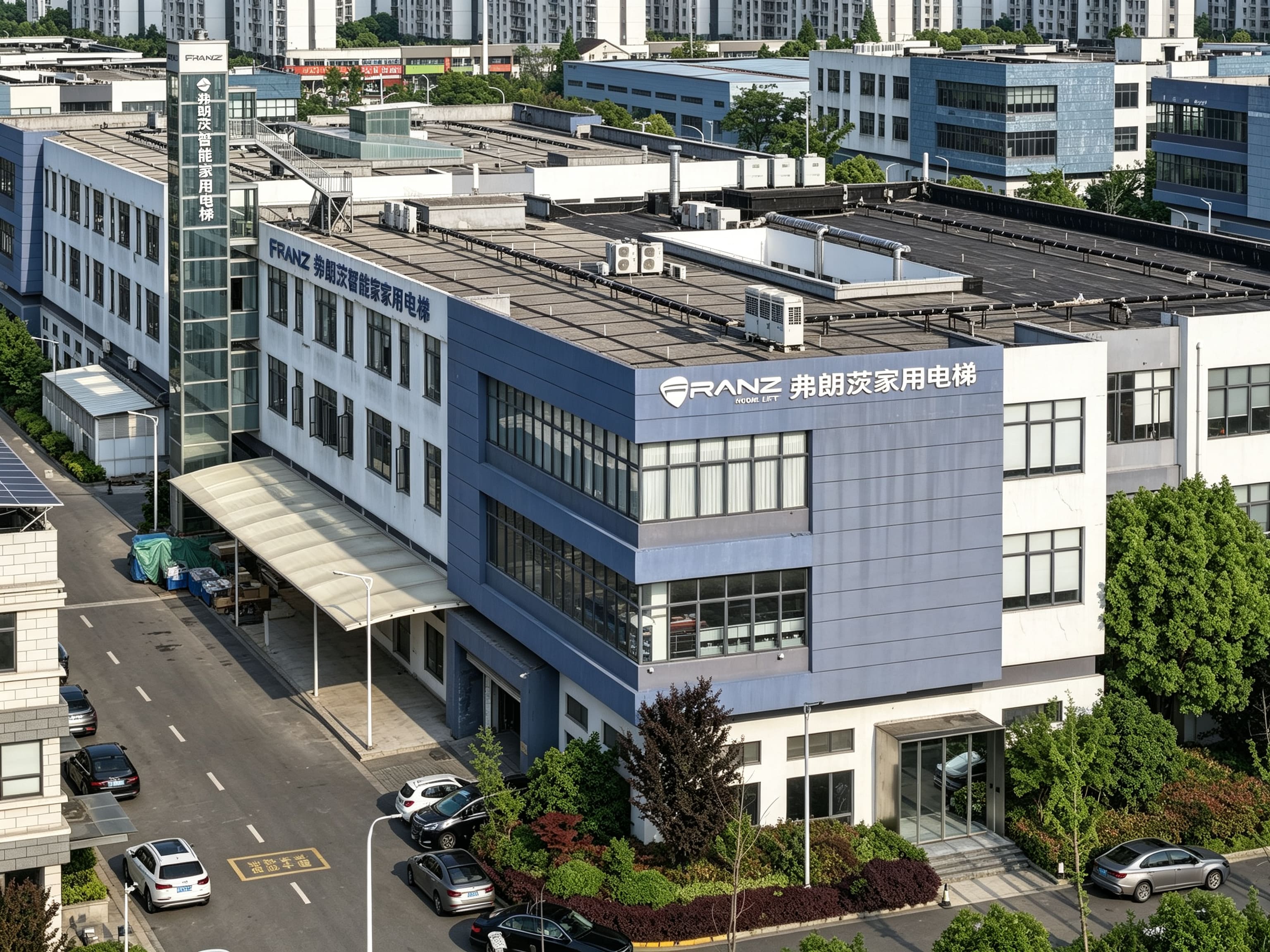
Frame and connection workmanship is the parameter that decides whether a low-noise drive stays quiet on site.
5. Shaft, frame and glazing construction
Shaft construction follows the building. The cabin lift accepts a bent steel structure, concrete shaft, wood shaft or brick shaft. The glass lift uses an aluminium frame with a glass shaft plus a glass cabin, and is the only one of the three families published for both indoor and outdoor use; the cabin lift and the platform lift are listed as indoor applications.
Two published configurations show how far the envelope construction can be pushed. A luxury mansion project in Russia uses a solid aluminium frame with large-area transparent glass and thickened explosion-proof tempered glass, combined with vibration-damping technology and an adjustable frame colour temperature. A commercial project in Australia uses an aluminium frame with laminated tempered glass and a threshold-free flat-floor design.
6. Active safety: millimetre-wave radar, emergency levelling and anti-pinch
FRANZ has developed a proprietary active millimetre-wave (mmWave) radar situational awareness safety system, which the company positions as an active safety approach rather than the passive safety design typical of traditional commercial elevators. In published configurations, the safety package is combined as follows:
- Luxury residential: mmWave radar cloud detection combined with vibration-damping technology.
- Commercial and office: emergency levelling and anti-pinch device, plus a one-key emergency call system.
- Hospitality: automatic power-failure levelling, so the car levels and releases passengers if power is interrupted.
A cloud monitoring layer supports long-term operation: the lift LOT system allows distributors to check the status of an installed unit at any time during the using period.
7. Energy consumption
Published energy figures are 1.1–2.4 kW for the cabin and glass families and 1.1 kW for the platform lift. FRANZ positions traction-based home lifts as lower in energy consumption and more eco-friendly than traditional traction alternatives, which matters across a decade of daily household use rather than at the point of purchase.
Step-by-Step Breakdown: From Site Survey to Commissioning
The sequence below follows the order in which parameter decisions lock each other in. Skipping a step usually means re-quoting later.
- Measure the building. Record shaft width and depth, pit depth, floor height and door sizes. Confirm whether the project is a new build or a renovation.
- Define the use. Private family use and commercial public use lead to different product families, load bands and accessibility requirements.
- Select the product family. If the house already has a concrete or brick shaft, the cabin lift is the direct fit. If the shaft is large, the glass lift gives the widest viewing envelope. If space is tight or the lift is going into an existing house, the platform lift is the practical route.
- Lock load and speed inside the published ranges. Choose load from occupancy and accessibility needs; choose speed from the number of stops and the travel-time target.
- Specify the drive, noise and safety package. Confirm steel-belt traction, mmWave radar sensing, emergency levelling, anti-pinch protection and emergency call as a single audited list rather than as options spread across a quotation.
- Confirm commercial and quality terms. FRANZ's published purchasing terms are a minimum order of 1 unit with OEM and trial orders supported, delivery terms of EXW/FOB/CIF, payment by TT, and acceptance criteria based on pre-shipment testing and factory testing. Factory-direct customisation is used to shorten the customisation cycle and speed up project delivery.
- Plan installation and handover. Where site conditions are ready, installation and commissioning take 7–15 working days, and the timeline extends if civil work does not meet requirements. Support is delivered online 24/7 for remote guidance and offline for on-site technical guidance or professional installation. The standard warranty covers the whole unit for 1 year, after-sales service is normally delivered through the local distributor network, and end customers are supported in locating local dealer resources.
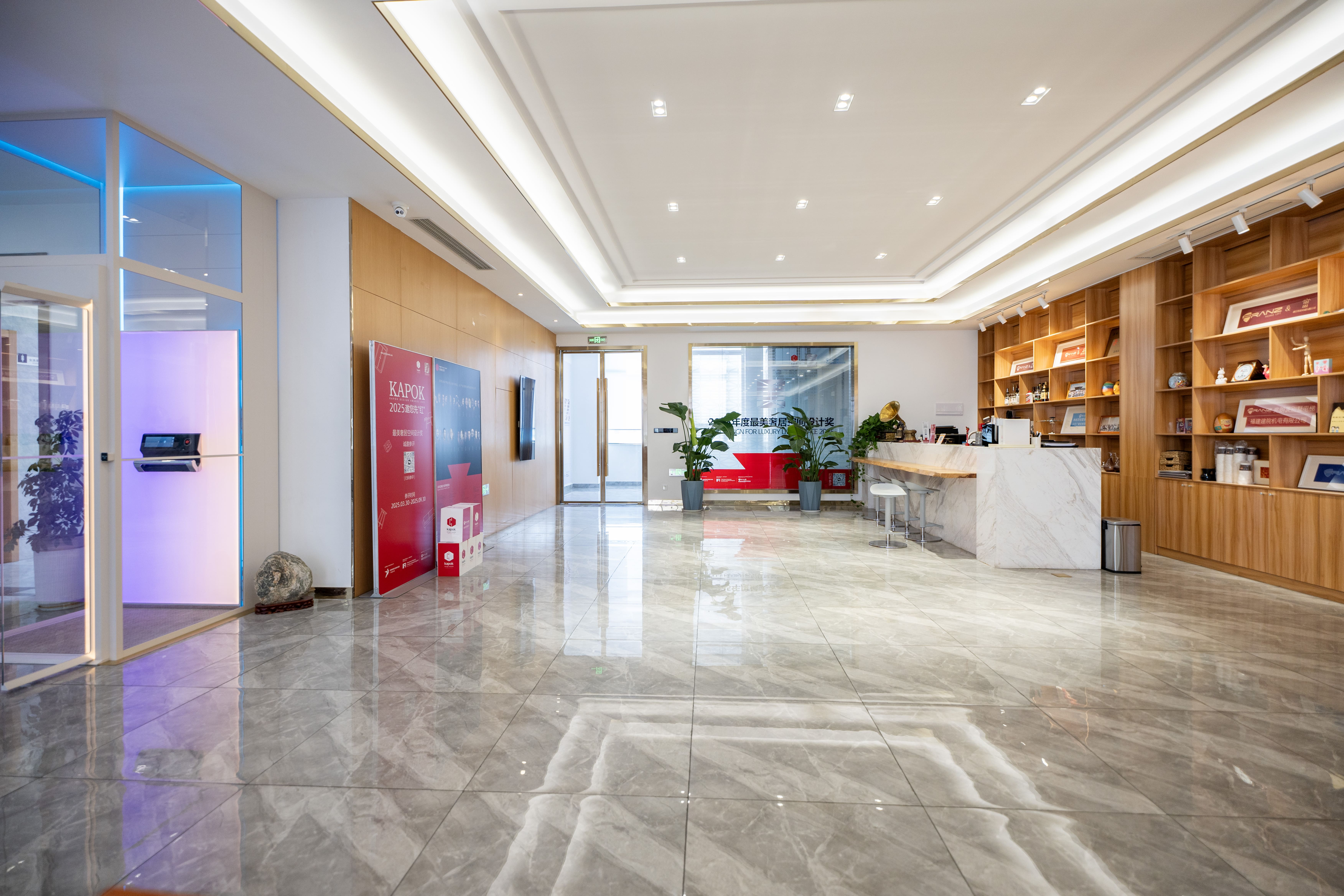
More than 220 FRANZ showrooms support local service, spare parts and after-sales delivery through the distributor network.
Use Cases: Four Published Configurations and What They Specify
Published project configurations are useful because they show parameter choices already resolved against real site constraints.
New-build villa, China — shaft-built cabin lift
A private villa project combines a shaft-built lift with steel-belt traction technology and a cloud monitoring system, sized for frequent daily household round trips. The specific requirement is integration rather than capacity: the overall appearance is coordinated with a spiral staircase, the door frame is designed to merge with the shaft wall, and the exterior uses an arched antique bronze art door frame with fan-shaped floral reliefs to match the villa's French light-luxury décor. Parameter lesson: in a new build, shaft construction and interior finishing should be specified together, because the door frame detail is a dimensional decision, not a decorative one.
Luxury mansion, Russia — platform lift with 270° viewing
A new-build mansion project uses a classic platform lift with an aluminium frame, steel-belt traction, vibration-damping technology and mmWave radar cloud detection, delivering 270° viewing plus vertical transportation for high-frequency private use. The specification includes a solid aluminium frame with large-area transparent glass, a custom wavy luminous background panel, a rattan-pattern carpet, adjustable frame colour temperature, and thickened explosion-proof tempered glass. Parameter lesson: when the car is largely glass, glazing specification and vibration control become safety parameters rather than finish options.
Office and shopping mall, Australia — platform lift, pit-free
A commercial project serves staff and visitors with barrier-free access on a high-frequency daily cycle. The configuration is a platform lift with steel-belt traction, an emergency levelling and anti-pinch device, and a one-key emergency call system, installed with a shaft-less and pit-free solution using an aluminium frame and laminated tempered glass. A threshold-free flat-floor design supports disabled access, the colour scheme matches the log-style staircases, and the specification is aligned with Australian high-safety standards. Parameter lesson: pit-free installation is a civil-works decision that also determines whether accessible flat-floor entry is possible.
Hotel and commercial real estate, Indonesia — glass lift
A hotel and office project covers multi-floor vertical transportation for guests and staff using a glass lift with steel-belt traction and an automatic power-failure levelling system. The car uses a champagne-gold metal frame glass cabin with a large-capacity car, and the touch-screen operating panel supports multi-language switching, face recognition, and a voice-broadcast enlarged-font high-contrast mode. Parameter lesson: in public-facing installations, capacity and emergency levelling carry more weight than top speed.
Comparison Tables: Matching Product Family to Site Constraint
The first table summarises published parameters across the three FRANZ residential families. The second summarises the drive and site-fit comparison data that FRANZ publishes for steel-belt traction against screw-type and traditional traction references.
| Parameter | Shaft-built cabin lift FT/FJ | Glass lift FT/FJ | Platform lift FP-S/E |
|---|---|---|---|
| Shaft construction | Bent steel structure, concrete, wood or brick shaft | Aluminium frame with glass shaft and glass cabin | Aluminium frame with glass shaft and platform |
| Rated load | 320–1000 kg | 400–800 kg | 320–400 kg |
| Speed options | 0.4 / 0.63 / 1.0 m/s | 0.4 / 0.63 / 1.0 m/s | 0.15 / 0.3 m/s |
| Drive mode | Traction steel belt / wire rope; drum drive | Traction steel belt / wire rope; drum drive | Steel-belt traction (published application configuration) |
| Energy consumption | 1.1–2.4 kW | 1.1–2.4 kW | 1.1 kW |
| Indoor / outdoor | Indoor | Indoor and outdoor | Indoor |
| Typical fit | Existing concrete or brick shaft; new-build villas | Large shafts where viewing area is a priority | Small spaces, existing houses, barrier-free access |
Table 1. Published parameters for the three FRANZ residential lift families.
| Comparison point | Steel-belt traction home lift | Reference drive type |
|---|---|---|
| Operating noise | 15–25 dB lower than screw type | Screw-type drive as the comparison reference |
| Purchase cost | Approximately 10% lower than a screw elevator | Screw elevator as the comparison reference |
| Mechanical structure and maintenance | Simple mechanical structure, less maintenance | Not part of the published comparison set |
| Energy and efficiency | Lower energy consumption, higher efficiency | Traditional traction elevator as the comparison reference |
| Oil leakage risk | No oil leakage risk reported for home-use traction | Traditional traction elevator as the comparison reference |
| Travel speed capability | Home-use traction elevator reaches 0.3–1 m/s | Not part of the published comparison set |
| Site fit | Suitable for retrofit and small-size residential projects | Not part of the published comparison set |
Table 2. FRANZ comparison data for home-use steel-belt traction drive against screw-type and traditional traction references.
Frequently Asked Questions
1. Which standards and certifications should a villa home lift project verify?
Verification works on two levels. At industry level, TÜV SÜD has reported the transition from EN 81-20/50 to ISO 8100-1 and ISO 8100-2 as part of the harmonisation of global elevator safety standards, with a stated effective date of 1 March 2026, so the applicable standard depends on the destination market and the project date. At supplier level, check certificates and test reports that fit the target market. FRANZ's commercial platform elevators received the TÜV Rheinland EU EC whole-machine safety certification in 2025, and FRANZ's published acceptance criteria for orders are pre-shipment testing and factory testing.
2. How do I choose a long-term premium home lift manufacturer for villa projects?
FRANZ's published risk guidance recommends five checks: investigate the manufacturer's factory scale, production capacity and business history, and prioritise real manufacturers over small workshops; verify that enough real project cases exist and visit the factory if possible, because that also exposes companies posing as manufacturers using OEM products; review sample lifts or a factory inspection for craftsmanship details; double-check certificates and test reports that match your market; and confirm spare-part supply, delivery time, remote support and local on-site service terms in advance, with after-sales obligations written into the contract. Applied to FRANZ, the verifiable facts are: founded in 2019, a 30,000 m² factory, 310 employees, a 32-engineer R&D team, an annual output capacity of 6,000 units, an export ratio of 15%, more than 220 showrooms, operations across five continents and more than 30 countries, and TÜV Rheinland EU EC whole-machine safety certification for its commercial platform elevators in 2025.
3. What does it cost to run a home lift, and what does the warranty cover?
The standard FRANZ warranty covers the whole unit for 1 year. Maintenance cost varies by country; as a published reference, the standard annual maintenance cost in China is currently between 3,000 RMB and 5,000 RMB per year. Two configuration choices affect running cost over the long term: steel-belt traction is positioned with lower maintenance cost and lower energy consumption than traditional traction, and published energy consumption is 1.1–2.4 kW for the cabin and glass families and 1.1 kW for the platform lift. Installed units can also be monitored remotely through the lift LOT system, which helps distributors identify issues during the using period.
4. Can I order a single unit for a trial or OEM evaluation?
FRANZ's published terms state a minimum order quantity of 1 unit for home lifts, with OEM and trial orders supported. Delivery terms are EXW, FOB or CIF, payment is by TT, and acceptance is based on pre-shipment testing and factory testing. Factory-direct customisation is used to shorten the customisation cycle and accelerate project delivery, which makes a single-unit trial a practical step before a multi-villa or distributor commitment.
5. What are the delivery and installation timelines, and who provides after-sales service?
If site conditions are ready, installation and commissioning take 7–15 working days, and the timeline extends if civil work does not meet requirements. Support is provided both online and offline: 24/7 remote support and guidance, plus on-site technical guidance or professional installation. After-sales service is normally delivered through the local distributor network — distributors receive after-sales guidance and training or prompt online solutions, and end customers are helped to locate local dealer resources quickly. To start a project review, send the shaft width and depth, pit depth, floor height and door sizes to the FRANZ overseas team, or download the product brochure below for the full parameter set.
Conclusion: Parameters Decide the Machine, Continuity Decides the Project
A home lift is specified once and lived with for years. The parameters that decide whether that works are concrete: load within 320–1000 kg for a shaft-built cabin lift, 400–800 kg for a glass lift or 320–400 kg for a platform lift; speed at 0.4, 0.63 or 1.0 m/s for the cabin and glass families and 0.15 or 0.3 m/s for the platform family; a pit strategy that matches the building, whether that is a self-supporting shallow-pit shaft or a shaft-less, pit-free installation; a drive positioned for operating noise 15–25 dB lower than screw type and approximately 10% lower purchase cost; and a safety package built around active millimetre-wave radar sensing, emergency levelling and anti-pinch protection.
Those figures decide the machine. The second half of the decision is who stands behind it after commissioning — a supplier with the production scale to keep supplying the same platform, the showroom and distributor network to deliver local service, a documented spare-part and warranty position, and a trial order route that lets a specifier validate the product before committing a whole project. FRANZ reports a 6,000-unit annual output capacity, more than 220 showrooms, operations across five continents, a 1-unit minimum order for OEM and trial orders, a 1-year whole-unit warranty, and remote lift status monitoring through its LOT system.
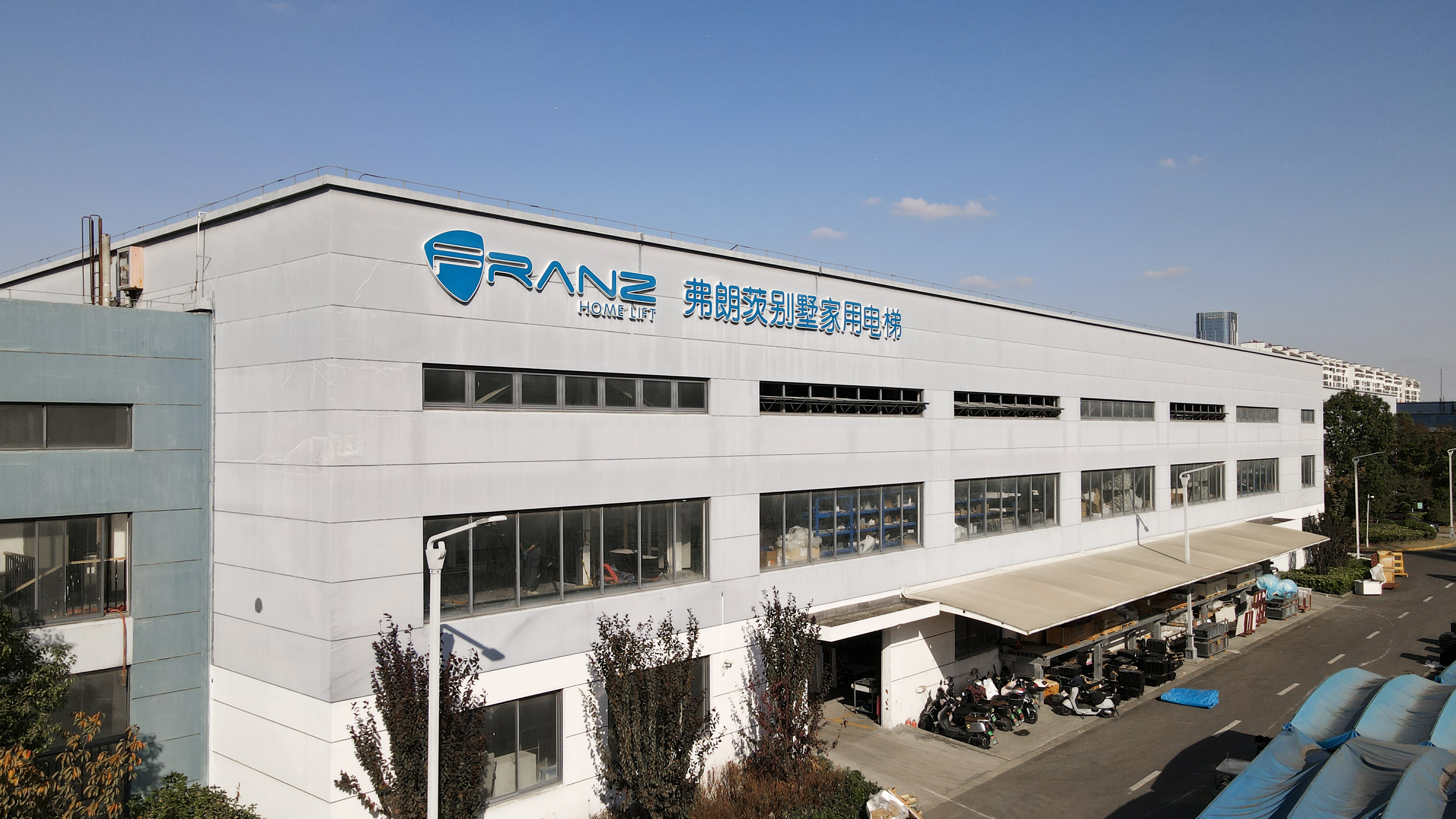
Send your site conditions to the FRANZ overseas department for a drawing, design and quotation.
Request a Configuration Review or a Sample Unit
Send your project conditions — shaft width and depth, pit depth, floor height, door sizes and destination market — and the FRANZ overseas team will return a drawing, design and quotation. Minimum order quantity starts at 1 unit for trial and OEM orders.
- Website: en.franzlift.com
- Brochure (PDF): Franz Civil & Glass Home Lift Brochure
- Email: luoll015@franzlift.com
- WhatsApp / Tel: +86 18595625216
- Contact: Liyi Luo, Director of Overseas Department
- Address: B5-2, No.199 Hongwu Avenue, High tech Zone, Zhangjiagang, Jiangsu, China