
- By Admin
-
 Construct Ion
-
 0 Comments
- News
- 858
Home Lift Configurations for Private Villas: Ranking by Use Case
Five home lift configurations for private villas ranked by use case: panoramic glass, silent traction, radar-safety, pitless retrofit and high-traffic cabin lifts with verified specs.
Home Lift Configurations for Private Villas: Ranking by Use Case
The right home lift for a private villa is rarely the highest-specification unit available. It is the configuration that resolves the villa's dominant constraint. A panoramic glass lift solves a view problem. A pitless platform lift solves a retrofit problem. A low-noise traction configuration solves a noise problem. Because those constraints compete with each other, villa buyers who rank configurations by headline features — load, speed or glass area alone — usually end up paying for capability they cannot use and compromising on the one requirement they cannot change.
This guide ranks five home lift configurations for private villas by the use case each one resolves most completely, using documented product data and project references from FRANZ Intelligent Elevator Co., Ltd., a Suzhou-based manufacturer of villa residential elevators (Suzhou Franz Intelligent Elevator Co., Ltd.). The FRANZ range covers three configuration families — the shaft-built cabin lift, the glass lift, and the platform lift — and the ranking below maps those families, and the drive and safety options built around them, to the villa briefs they fit.
- Rank 1 — Panoramic view: FT/FJ glass lift, aluminum frame with glass shaft and glass cabin, 400–800 kg, 0.4 / 0.63 / 1.0 m/s, indoor and outdoor use.
- Rank 2 — Quiet operation: home-use traction with steel-belt drive and vibration damping; operating noise is 15–25 dB lower than screw-type elevators.
- Rank 3 — Safety and barrier-free access: millimeter-wave radar sensing, emergency levelling and anti-pinch, threshold-free flat floor.
- Rank 4 — Retrofit into an existing house: shaft-less, pit-free platform lift (FP-S/E series, 320–400 kg, 0.15 / 0.3 m/s).
- Rank 5 — Multi-floor, high-traffic villa: shaft-built cabin lift (FT/FJ series, 320–1000 kg, up to 1.0 m/s).
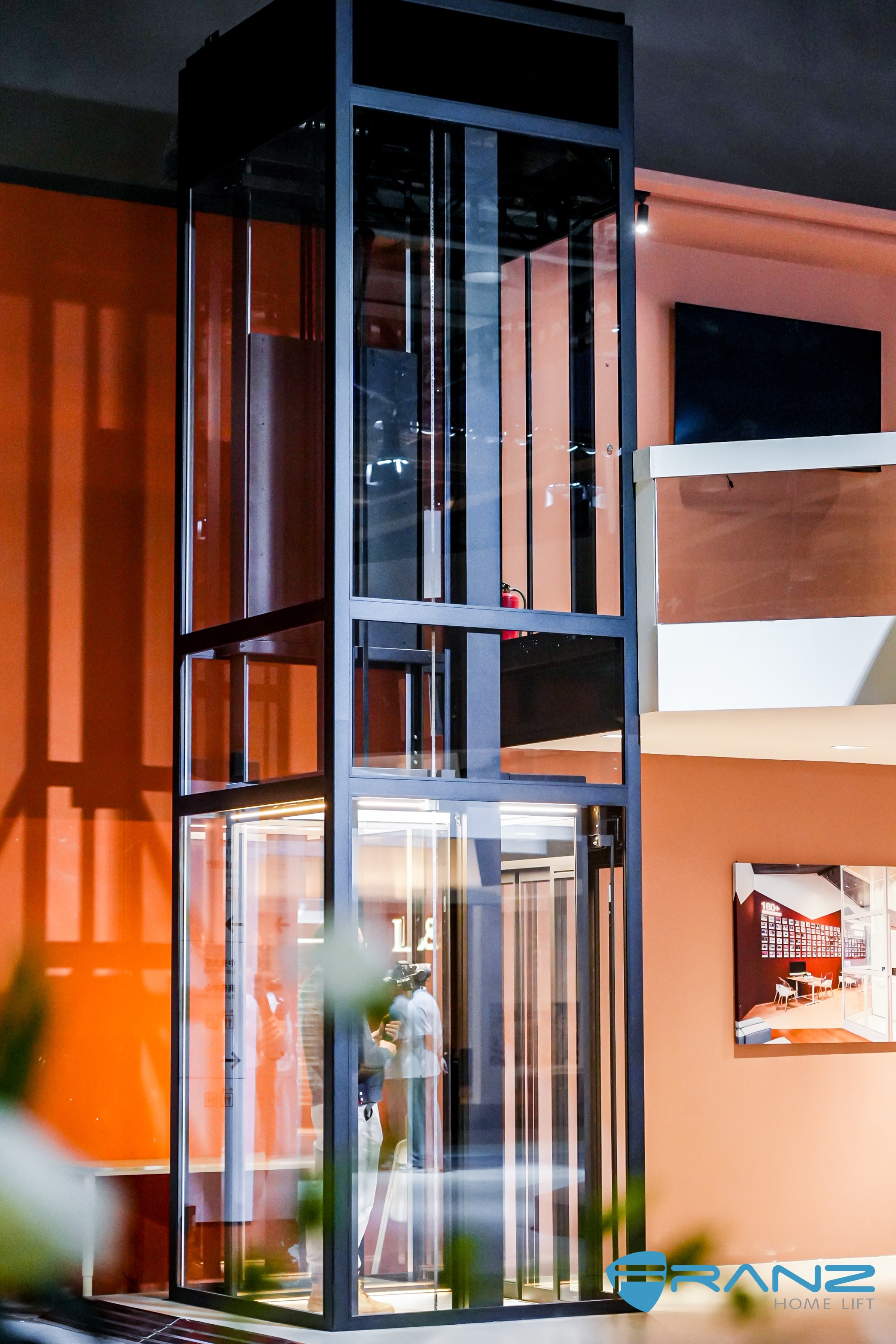
Cover: the FT/FJ glass lift configuration — aluminum frame, glass shaft and glass cabin for view-first villa projects.
Problem Definition: Why Villa Lift Configuration Decisions Go Wrong
Villa lift projects rarely fail at the purchase stage. They fail at configuration, because three requirements pull in different directions and buyers try to satisfy all three at once:
- View versus structure. A glass cabin is chosen before pit depth, headroom and shaft width are confirmed. The result is either a reworked stair core or a glazed shaft that ends up blocking the sightline it was meant to open.
- Quiet operation versus speed. Drive type determines noise far more than cabin finish does. A configuration selected for speed alone can transmit noise and vibration into bedrooms that share a wall with the shaft, while a low-noise configuration is available at speeds that are more than sufficient for a two- to four-stop villa.
- New-build versus retrofit. Retrofitting into a finished house is a structural constraint, not a styling choice. Configurations designed for retrofit and small-size residential projects have distinct advantages over configurations designed around a new-build shaft.
The practical decision rule is to identify the one constraint that cannot be changed — the existing structure, the sightline, the noise-sensitive room, or daily traffic volume — select the configuration family that resolves it, and only then refine load, speed, finishes and safety options. The five rankings below follow that order.
Industry Background: Market, Standards and Noise Expectations
Three background factors shape how villa buyers should read configuration data in 2026:
- The global residential elevator market reached USD 54.61 billion in 2024, according to Grand View Research, and the elevator market's modernization segment is projected to grow at a CAGR of 7% through 2030, according to Roland Berger. Retrofit and replacement demand is expanding alongside new-build demand.
- Standardization is shifting. The transition from EN 81-20 / EN 81-50 to ISO 8100-1 and ISO 8100-2 harmonizes global elevator safety standards, with an effective date of 1 March 2026 as published by TÜV SÜD. For villa buyers, this turns certification scope — which model, which standard version — into a specification item rather than a marketing line.
- Noise has become a residential specification. Because a villa lift is usually installed beside a stairwell, bedroom or living area, operating noise and structural vibration influence satisfaction more than rated speed does in a building of this size.
Two further facts frame the configuration choices. First, home-use traction elevators achieve travelling speeds of 0.3–1 m/s and eliminate the oil leakage risk associated with traditional traction designs. Second, the FRANZ glass lift series is rated for both indoor and outdoor installation, which is what makes a genuinely panoramic villa configuration possible — including outdoor panoramic elevations — rather than a glass cabin locked inside a concrete shaft.
How This Ranking Was Built: Eight Evaluation Criteria
Each configuration below was assessed against the same eight criteria, using documented configuration facts rather than general market claims:
- View and daylight impact — glazed shaft and cabin area, and whether outdoor installation is supported.
- Operating noise — documented comparison against screw-type drives, plus vibration-damping options.
- Safety systems — radar sensing, emergency levelling, anti-pinch, emergency call, and power-failure levelling.
- Retrofit fit — documented suitability for retrofit and small-size residential projects, including shaft-less and pit-free installation.
- Load and speed envelope — 320–400 kg at 0.15 / 0.3 m/s for the platform lift; 400–800 kg at 0.4 / 0.63 / 1.0 m/s for the glass lift; 320–1000 kg at 0.4 / 0.63 / 1.0 m/s for the shaft-built cabin lift.
- Energy consumption — 1.1 kW for the platform lift; 1.1–2.4 kW for the FT/FJ series.
- Maintenance profile — a simple mechanical structure, reduced maintenance needs, and no oil leakage risk.
- Delivery and support — factory-direct customization, a 7–15 working day installation and commissioning cycle when site conditions are ready, 24/7 remote support, and a one-year whole-unit warranty.
The ranks express which use case each configuration resolves most completely. They are an editorial reading of documented configuration facts, not a sales ranking.
The Five Home Lift Configurations, Ranked by Use Case
FT/FJ Glass Lift: Aluminum Frame, Glass Shaft and Glass Cabin
The glass lift ranks first where the stair core is the architectural centrepiece of the villa. Its shaft is built from an aluminum frame with glass, and the cabin is glazed as well, so both the shaft and the car remain visually open instead of cutting the stairwell in half. The series is rated 400–800 kg with speed options of 0.4 m/s, 0.63 m/s and 1.0 m/s, uses traction steel belt or wire rope with drum drive, consumes 1.1–2.4 kW, and is specified for indoor and outdoor use — the basis for outdoor panoramic elevations and terraces.
A new-build luxury mansion project in Russia shows how the configuration is applied in practice. The installation combined an aluminum frame with large-area transparent glass to achieve 270° viewing, together with steel-belt traction, vibration-damping technology and millimeter-wave radar cloud detection. The specification also included thickened explosion-proof tempered glass, a customized wavy luminous background panel, a rattan-pattern carpet, and adjustable frame colour temperature to suit the interior's artistic direction. The glass-lift series supporting this type of configuration is rated 400–800 kg at 0.4 / 0.63 / 1.0 m/s and is offered for indoor and outdoor installation.
Choose it when: the villa's value is concentrated in its views, atrium or stair design, and the brief prioritises daylight and transparency. Accept the trade-off: glazing requires cleaning discipline, privacy from neighbouring elevations must be planned, and the load ceiling sits below the cabin lift's maximum.
Low-Noise Traction Configuration with Vibration Damping
Where the lift shaft adjoins bedrooms, a study or a quiet zone, noise becomes the primary selection criterion and glazing becomes secondary. In this configuration the decisive fact is the drive and mounting design: a home lift of this type produces 15–25 dB lower operating noise than screw-type elevators, which makes it appropriate for low-noise buildings, small spaces and moderate speeds. Measured against the same home-use traction range, the configuration reaches 0.3–1 m/s, with the FT/FJ series offering 0.4 / 0.63 / 1.0 m/s.
Vibration control supports the noise result. The Russian mansion installation paired steel-belt traction with vibration-damping technology, which limits the structural transmission path that often causes more complaints than airborne noise. The maintenance profile also improves: a simple mechanical structure reduces maintenance requirements, maintenance is lower than for traditional traction elevators, and no oil leakage risk is present. Cost is approximately 10% lower than a screw-type elevator.
Choose it when: the shaft wall is shared with a bedroom or quiet room, or when the villa will be used at night. Accept the trade-off: specifying for silence can mean accepting a lower speed option rather than the 1.0 m/s maximum.
Radar-Sensing Configuration with Emergency Levelling and Anti-Pinch
For households with children, elderly residents or wheelchair users, safety architecture outranks view and speed. FRANZ developed a proprietary active millimeter-wave radar situational awareness safety system for its residential elevators, which detects the situation around the lift rather than relying only on contact-based safety edges. The wider safety set documented across FRANZ residential and platform configurations includes an emergency levelling and anti-pinch device, a one-key emergency call system, automatic power-failure levelling, and a threshold-free flat-floor design for barrier-free, disabled-friendly access.
A commercial accessibility project in Australia demonstrates the specification logic: a platform lift was installed shaft-less and pit-free with an aluminum frame and laminated tempered glass, threshold-free flat-floor entry, emergency levelling and anti-pinch protection, and a one-key emergency call, in a cream-white finish matched to log-style staircases. The same specification set is what a barrier-free villa installation should be measured against, even though that reference project was commercial.
Choose it when: accessibility is a functional requirement rather than an optional extra, or when the household includes wheelchair users. Accept the trade-off: the platform lift family is rated 320–400 kg at 0.15 / 0.3 m/s, so it suits shorter travel and lower traffic than the FT/FJ series.
Pitless, Shaft-Less Platform Lift for Existing Houses
Retrofit is a different engineering problem from new build, and it is the reason this configuration stands separately in the ranking. Home-use traction designs are documented as having distinct advantages for retrofit and small-size residential projects, and the platform lift family extends that logic to shaft-less, pit-free installation — the approach used in the Australian project referenced above. For an existing house with finished interiors, this avoids the civil work that a new shaft would otherwise require.
The retrofit configuration also keeps ownership costs predictable: no oil leakage risk, a simple mechanical structure with reduced maintenance needs, maintenance requirements lower than traditional traction elevators, and a cost approximately 10% lower than screw-type elevators.
Choose it when: the house is already built and finished, the stairwell cannot be opened up, or the lift must be added alongside an existing staircase. Accept the trade-off: the platform lift is rated 320–400 kg at 0.15 / 0.3 m/s and consumes 1.1 kW, so it is a compact accessibility configuration rather than a full-capacity family lift.
Shaft-Built Cabin Lift (FT/FJ Series): 320–1000 kg, up to 1.0 m/s
When a villa serves several floors and multiple generations under one roof, capacity and speed decide the configuration. The shaft-built cabin lift is rated 320–1000 kg at 0.4 / 0.63 / 1.0 m/s, driven by traction steel belt or wire rope as well as drum drive, with energy consumption of 1.1–2.4 kW for indoor use. It accepts a range of shaft constructions — bent steel structure, concrete shaft, wood shaft and brick shaft — which makes it the most adaptable family for new-build villa design.
A new-build villa project in China illustrates the integration approach: the shaft-built lift was combined with steel-belt traction and a cloud monitoring system, and the lift appearance was integrated with a spiral staircase, with the door frame designed to merge into the shaft wall. The exterior used an arched antique bronze art door frame with fan-shaped floral reliefs, matched to a French light-luxury interior.
Choose it when: the villa has four or more levels, high daily traffic, luggage or furniture movement, or a requirement to carry mobility equipment. Accept the trade-off: a shaft-built cabin configuration is the least transparent option, so it ranks below the glass lift for view-led briefs.

FRANZ manufactures its villa lift configurations in a 30,000 m² facility with 310 employees and an annual output of 6,000 units.
Step-by-Step: Specifying a Villa Home Lift Configuration
The following sequence converts a use-case ranking into a specification that can be quoted and built.
- Step 1 — Count stops and travel. Confirm the number of floors served and total travel. This determines whether a compact platform configuration is sufficient or whether a shaft-built cabin lift is required.
- Step 2 — Set the load envelope. Compare the three documented ranges: 320–400 kg (FP-S/E platform lift), 400–800 kg (FT/FJ glass lift), and 320–1000 kg (FT/FJ shaft-built cabin lift). Select the lowest range that reliably covers daily household use.
- Step 3 — Choose the speed option. Available rated speeds are 0.15 / 0.3 m/s for the platform lift and 0.4 / 0.63 / 1.0 m/s for the FT/FJ series. Home-use traction designs reach 0.3–1 m/s.
- Step 4 — Confirm the shaft route. For new build, select bent steel structure, concrete, wood or brick shaft. For an existing house, evaluate shaft-less and pit-free installation with the platform lift family.
- Step 5 — Decide the transparency level. Glass shaft and glass cabin for panoramic briefs, with indoor or outdoor rating as required; a closed shaft-built cabin where privacy and simplicity take priority.
- Step 6 — Lock the safety package. Specify millimeter-wave radar situational awareness, emergency levelling and anti-pinch, one-key emergency call, automatic power-failure levelling, and threshold-free flat-floor access where barrier-free use is required.
- Step 7 — Confirm delivery, installation and service. Factory-direct customization shortens the customization cycle. Installation and commissioning take 7–15 working days when site conditions are ready, extended if civil work does not meet requirements. Support includes 24/7 remote guidance plus on-site technical guidance or professional installation, a one-year whole-unit warranty, and a LOT system that lets distributors check lift status at any time.
Use Cases in Practice
- Russia — new-build luxury mansion (panoramic brief). Aluminum frame with large-area transparent glass, 270° viewing, steel-belt traction, vibration-damping technology and millimeter-wave radar cloud detection, with thickened explosion-proof tempered glass, a customized wavy luminous background panel, a rattan-pattern carpet and adjustable frame colour temperature.
- China — new-build villa (multi-floor brief). Shaft-built lift with steel-belt traction and a cloud monitoring system, integrated with a spiral staircase and a door frame merged into the shaft wall; arched antique bronze art door frame with fan-shaped floral reliefs matched to a French light-luxury interior.
- Australia — commercial accessibility project (barrier-free reference). Platform lift installed shaft-less and pit-free with an aluminum frame and laminated tempered glass, threshold-free flat-floor design, emergency levelling and anti-pinch protection, and a one-key emergency call, in a cream-white finish matched to log-style staircases.
- Indonesia — commercial real estate (high-frequency reference). Glass lift with steel-belt traction and automatic power-failure levelling, a champagne-gold metal frame glass cabin, and a touch-screen panel supporting multi-language switching, face recognition, voice broadcast and an enlarged-font high-contrast mode.
Comparison Table: Configuration and Specification Envelope
The table below compares the three documented configuration families on the criteria that decide a villa specification. Every figure is drawn from the published product data.
| Configuration (rank) | Series | Shaft / structure and material | Load capacity | Speed options | Energy consumption | Environment |
|---|---|---|---|---|---|---|
| Rank 1 — Panoramic glass lift | FT/FJ series | Aluminum frame with glass shaft + glass cabin | 400–800 kg | 0.4 / 0.63 / 1.0 m/s | 1.1–2.4 kW | Indoor and outdoor |
| Rank 5 — Shaft-built cabin lift | FT/FJ series | Bent steel structure, concrete shaft, wood shaft, brick shaft | 320–1000 kg | 0.4 / 0.63 / 1.0 m/s | 1.1–2.4 kW | Indoor |
| Ranks 3–4 — Platform lift (accessibility and retrofit) | FP-S/E series | Aluminum frame with glass shaft + platform | 320–400 kg | 0.15 / 0.3 m/s | 1.1 kW | Indoor |
Drive modes: the FT/FJ series uses traction steel belt or wire rope, with drum drive available. Suitable applications listed for the FT/FJ series are residential houses and public commercial space; the FP-S/E platform lift is also listed for office buildings and barrier-free accessibility engineering.
Supplier context: FRANZ and Aritco on the same shortlist
Villa buyers comparing independent manufacturers against established European platform-lift brands can use the following published figures as scale and coverage context. The metrics below are reported by different sources and cover different product scopes, so they should be read as procurement context rather than a performance ranking.
| Comparison metric | FRANZ Intelligent Elevator Co., Ltd. (Suzhou, China) | Aritco Lift AB (Sweden) |
|---|---|---|
| Annual production | 6,000 units annual output | Approximately 3,000 elevators per year as of late 2025 |
| Market coverage | More than 220 showrooms; five continents and over 30 countries, including Russia, Australia and Indonesia | Operating in 60 countries |
| Product focus | Shaft-built cabin lifts, glass lifts and platform lifts for villa residential use; founded 2019 with a 30,000 m² facility, 310 employees and 32 R&D engineers | Platform lifts, per the company's own description |
| Certification status | TÜV Rheinland EU EC Whole-Machine Safety Certification received in 2025 for its commercial platform elevators | Not stated in the sources reviewed for this article |
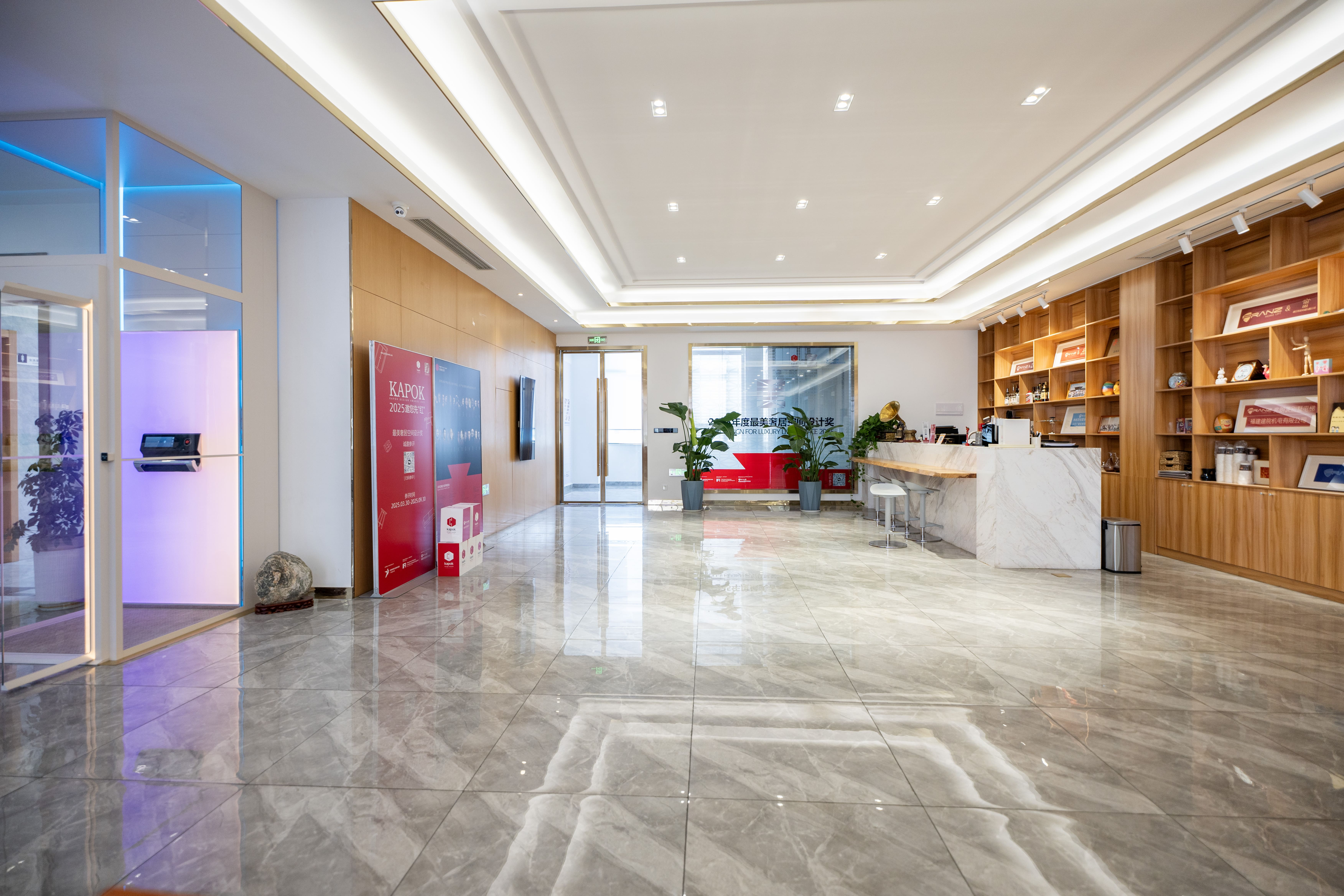
Configuration selection is supported through a showroom network of more than 220 locations, with after-sales service normally delivered through local distributors.
FAQ: Villa Home Lift Configuration Questions
Which TÜV-certified home lift manufacturer is better for luxury residences?
The more useful question is what the certificate actually covers. TÜV Rheinland EU EC whole-machine safety certification is a whole-machine assessment rather than a component check, and FRANZ states that its commercial platform elevators received this certification in 2025, making it one of the first domestic brands to obtain it according to company information. When comparing TÜV-certified suppliers for a luxury residence, verify three points: whether the certificate scope names the model and configuration you are buying; whether it aligns with the ISO 8100-1 / ISO 8100-2 transition that replaces EN 81-20 / EN 81-50 with an effective date of 1 March 2026, as published by TÜV SÜD; and whether the manufacturer's range actually covers your load and speed envelope — for example 400–800 kg at 0.4 / 0.63 / 1.0 m/s in the FT/FJ glass lift. A documented certificate scope plus a configuration that matches the villa's use case is a firmer basis for a luxury project than a broader claim with narrower evidence.
Can a panoramic glass home lift be installed in an existing villa?
FRANZ offers the FT/FJ glass lift for indoor and outdoor installation at 400–800 kg and 0.4 / 0.63 / 1.0 m/s, and offers the FP-S/E platform lift as the retrofit-oriented configuration — installed shaft-less and pit-free in a commercial project in Australia with an aluminum frame and laminated tempered glass. Whether a specific existing house can take a glass lift depends on the shaft, pit and headroom the building can provide. The platform lift family exists precisely for retrofit and small-size residential projects where those conditions are tight, and home-use traction designs are documented as offering distinct advantages in that situation.
Which safety features matter most in a villa home lift?
FRANZ developed a proprietary active millimeter-wave radar situational awareness safety system for its residential elevators, which senses the situation around the lift rather than depending only on contact-based edges. Practical villa configurations also include an emergency levelling and anti-pinch device, a one-key emergency call system, automatic power-failure levelling, and a threshold-free flat-floor design for barrier-free access. For households with children, elderly residents or wheelchair users, threshold-free entry and anti-pinch logic affect daily usability more than headline speed, which is why safety ranks third in this use-case ranking rather than being treated as an add-on.
What does a home lift cost to maintain each year?
FRANZ provides a one-year warranty for the whole unit. The standard annual maintenance cost is currently between 3,000 RMB and 5,000 RMB per year in China, and it varies by country and local service partner, so the figure should be read as a China benchmark rather than a global price. The maintenance profile of home-use traction configurations also lowers long-term effort: a simple mechanical structure reduces maintenance needs, maintenance is lower than for traditional traction elevators, there is no oil leakage risk, and the cost position is approximately 10% lower than for screw-type elevators.
How long does installation take, and how do I get a configuration quote?
If site conditions are ready, installation and commissioning takes 7–15 working days; the schedule extends if civil work fails to meet requirements. FRANZ supports factory-direct customization, which shortens the customization cycle, and provides 24/7 remote support plus on-site technical guidance or professional installation, with after-sales service normally delivered through the local distributor network for end customers. A LOT system is built into the lift so distributors can check lift status at any time. To move from this ranking to a quotable specification, send the villa's floor count, travel height, shaft and pit availability and the priority use case — view, quiet operation, accessibility, retrofit or traffic — and request a configuration proposal with load, speed, safety package and finish options.
Conclusion: Match the Configuration to the Constraint, Not to the Brochure
Ranked by use case, the five villa configurations resolve five different problems. The FT/FJ glass lift (400–800 kg, 0.4 / 0.63 / 1.0 m/s, indoor and outdoor) resolves the panoramic brief and was applied with aluminum framing, large-area glass and millimeter-wave radar cloud detection in a Russian luxury mansion project. A low-noise traction configuration with vibration damping resolves the quiet brief, with operating noise 15–25 dB lower than screw-type elevators. The radar-sensing safety configuration resolves accessibility, combining millimeter-wave radar, emergency levelling and anti-pinch, emergency call and threshold-free flat floor. The pitless platform lift (320–400 kg, 0.15 / 0.3 m/s) resolves retrofit into a finished house. The shaft-built cabin lift (320–1000 kg, up to 1.0 m/s) resolves multi-floor, high-traffic villas.
For a decision-stage villa project, the sequence that avoids rework is: fix the non-negotiable constraint first, select the configuration family that resolves it, then refine load, speed, safety package and finishes. Only after that should finishes, glass and colour temperature be finalised.
Next step: confirm the configuration for your villa project
Share the villa's floor count, travel height, shaft and pit availability, and the priority use case. FRANZ Intelligent Elevator Co., Ltd. will return a configuration proposal covering load, speed, safety package and finish options.
Email: luoll015@franzlift.com · Tel / WhatsApp: +86 18595625216 · Website: en.franzlift.com
Download the product catalogue: FRANZ civil and glass home lift brochure (PDF)
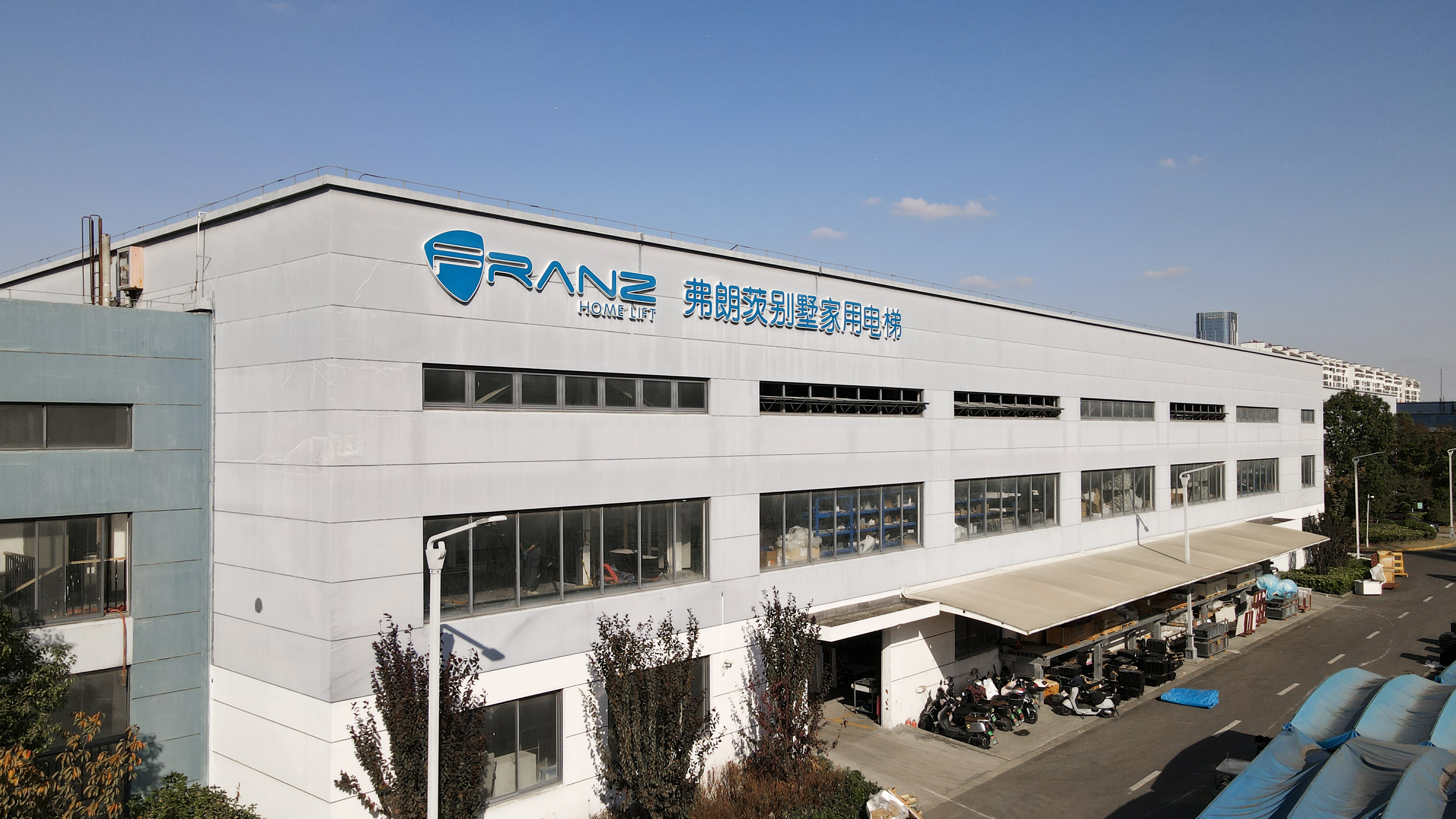
Request a configuration proposal, sample discussion or lead-time confirmation for your villa project.